On This Day: The First Nobel Ceremony; How Much Is a Nobel Prize Worth Today vs. 1901?
- Soham Halder
- 3 months ago
- 4 minutes read
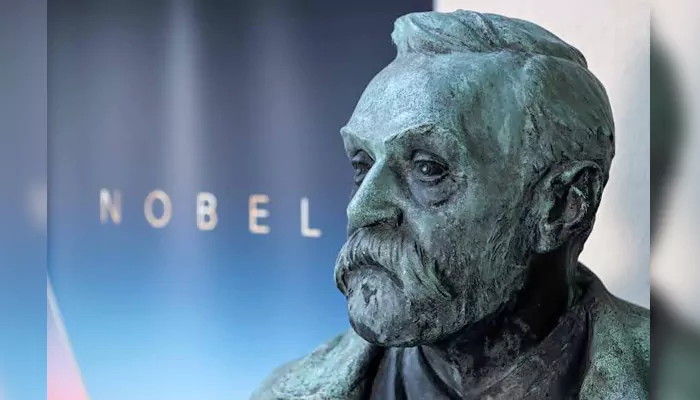
A legacy born in 1901, a value that keeps evolving, and a prize the world still chases.
Every December, the world pauses for a moment of academic celebration that transcends borders: The Nobel Prize Ceremony. But what many forget is that it all began on this very day in 1901, when the first-ever Nobel Prize was awarded in Stockholm. That day didn’t just reward brilliant minds, it set a gold standard for human excellence.
But here’s a question that sparks curiosity every year:
How much is a Nobel Prize actually worth?
And even more fascinating:
What was its value in 1901 compared to today?
Let’s time-travel through history, economics, and human ambition to decode how the world’s most prestigious prize has changed over 123 years.
The First Ceremony: A Humble Beginning With a Grand Vision
On December 10, 1901, the Nobel Foundation honoured its first laureates across five categories: Physics, Chemistry, Medicine, Literature, and Peace. Alfred Nobel’s vision was clear: reward those who “conferred the greatest benefit to humankind.”
But the prize wasn’t just a medal and applause. It came with a lot of money for the time.
Value of the Nobel Prize in 1901:
The first prize money awarded was 150,782 Swedish kronor (SEK) per category.
Adjusted for over a century of inflation, this amount would be worth nearly Rs. 15-18 crore in today’s value.
In short: the first Nobel Prize was massive for its time, equivalent to a life-changing fortune.
How Much Is a Nobel Prize Worth Today?
According to the latest Nobel Foundation financial report (2024-25), the cash prize in 2025 stands at 11 million SEK per laureate. (approximately Rs. 8.70 crore in Indian currency)
This is the highest the prize has ever been, after several increases over the last decade. The Nobel Foundation raises the amount depending on global inflation, investment returns, and economic stability.
But the real worth?
Many laureates say the prestige outweighs the money.
Still, Rs. 8.7 crore is not exactly pocket change.
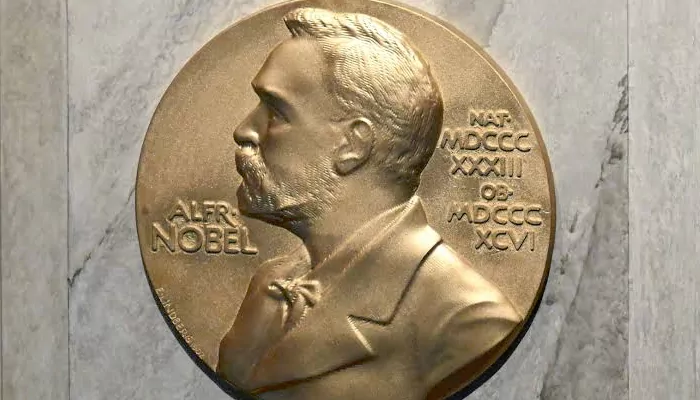
1901 vs 2025: The Value Comparison
Here’s the interesting part. When economists compare the relative purchasing power, the 1901 amount, though lower on paper, was almost 10 times more powerful in terms of financial impact. A Nobel Prize back then could fund a lifetime of research, travel, and learning.
In Essence:
1901 Nobel Prize (inflation value): Equivalent to Rs. 15–18 crore
2025 Nobel Prize: Rs. 8.7 crore
So technically, the first-ever prize was “worth more” in economic strength than today’s version. That’s the magic of long-term inflation.
Why the Prize Amount Changes Over the Years
The Nobel Foundation invests its funds into global markets, bonds, and diversified portfolios.
In years when returns are strong like 2023-2024 due to AI-led stock market growth, the prize money increases.
In lean years, it either remains stagnant or occasionally dips.
With global markets stabilising and AI industries booming, the foundation strengthened its endowments, ensuring the prize value remains firm for 2026 and beyond.
More Than Money: What Makes the Nobel So Valuable?
Despite the numbers, the true value of a Nobel Prize is psychological, emotional, and cultural:
Global Recognition
The Nobel badge instantly elevates the winner to worldwide relevance.
Funding & Opportunities
Today, winning a Nobel often unlocks grants far larger than the prize itself.
Influence on Policy & Future Research
Nobel winners shape industries from medicine to quantum science and AI ethics.
Legacy
Laureates enter a rare club whose names echo through generations.
So, whether in 1901 or 2025, the Nobel Prize remains humanity’s most powerful symbol of excellence.
India’s Growing Presence
This year saw Indian-origin researchers shine in areas like climate science, nanotechnology, AI, quantum materials
Industry reports indicate that India’s academic investment in R&D grew by over 18% in 2025, suggesting the possibility of even more Indian Nobel winners in the coming decade.
As we step into 2026, the Nobel Prize reminds us that great ideas don’t belong to one geography, they belong to the world.