

Here are today’s most important updates from the realm of Science and Space.
From Mars to Home: Stunning Image Captures Earth and Moon
On the occasion of Earth Day, a striking image shared by NASA offered a unique view of our planet from far away, reminding people how small and distant Earth appears in space. NASA posted a composite image of Earth and the Moon, captured by a spacecraft orbiting Mars instead of a satellite near Earth. The agency said that they see you, NASA Earth, and shared a view of the extraordinary blue planet and its moon taken by the HiRISE instrument aboard the Mars Reconnaissance Orbiter while wishing everyone a happy Earth Day. The agency explained that the HiRISE camera would make a great backyard telescope for viewing Mars and can also be used from Mars to observe other planets.
Cosmic Iceball: 3I/ATLAS Comes From Extreme Cold Zone
(Image courtesy: Science Alert)
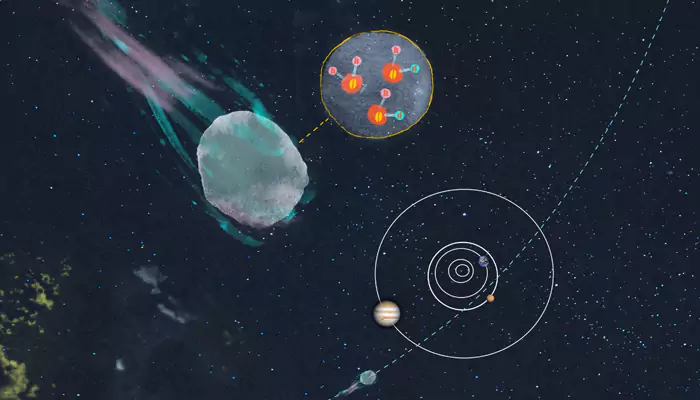
The comet that rambled past us from another star last year likely originated in a cold, isolated corner of the galaxy that had yet to gel into its own solar system, astronomers reported Thursday. Comet 3I/ATLAS is only the third interstellar visitor to be confirmed and quite possibly the oldest. Scientists estimate it could be up to 11 billion years old, more than twice as old as the Sun. The errant but harmless iceball was discovered last summer, giving NASA and the European Space Agency plenty of time to aim multiple space telescopes at it as it zoomed past Mars in October and made its closest approach to Earth in December. It's now well past Jupiter on its way out of our Solar System for good, still visible only to the professionals. In the study, scientists said they detected extremely high amounts of deuterium, or heavy hydrogen, in comet 3I/ATLAS's water.
Powerful solar storm causes radio blackout across half the Earth
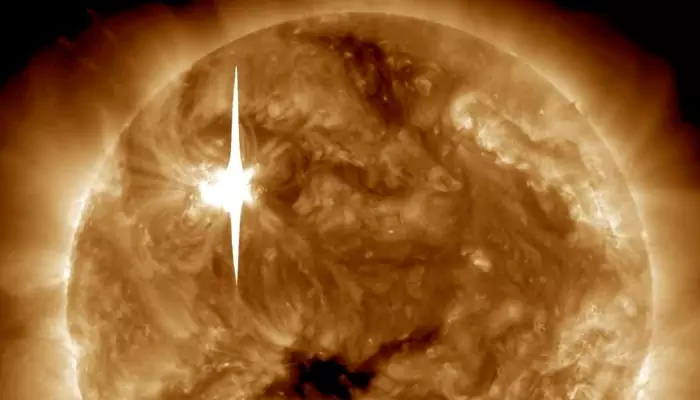
An X-class solar flare, the most powerful category of solar eruption on the books, fired off from the Sun's surface and sent a furious wave of electromagnetic radiation hurtling toward Earth at the speed of light. The result: a strong radio blackout across the sunlit side of our planet. Scientists classify them from weakest to strongest: A, B, C, M, and X. Each step up the ladder is 10 times more powerful than the one before it. An X-class flare sits right at the top. When they arrived, they slammed into a specific layer of Earth's upper atmosphere called the ionosphere, which is a vast shell of electrically charged particles that wraps around the planet between 60 and 1,000 kilometres above the surface. Normally, high-frequency radio waves bounce off the ionosphere's upper layers and travel great distances, much like how you can skip a stone across water.
Polar Bears at Risk as US Advances Arctic Drilling Plans

A new proposal in the United States has raised concerns about the safety of wildlife in northern Alaska. The plan could allow some protected animals, including polar bears and walruses, to be harmed during oil-drilling activities without legal consequences, reported NYPost. The proposed regulations are part of President Donald Trump's oil lease program and are currently awaiting approval by the US Fish and Wildlife Service. The rule would allow what is described as incidental and unintentional take of a small number of polar bears and Pacific walruses by energy companies operating in critical habitats. Walruses are also at risk. Human activities can panic them, leading to stampedes and some animals being crushed to death. The Fish and Wildlife Service stated in its review that if female polar bears abandon their cubs due to human interference, it could lead to their deaths.











.webp)