Rule 49M: Can You Change Your Mind After Signing the Voter Register?
- Devyani
- 9 hours ago
- 3 minutes read
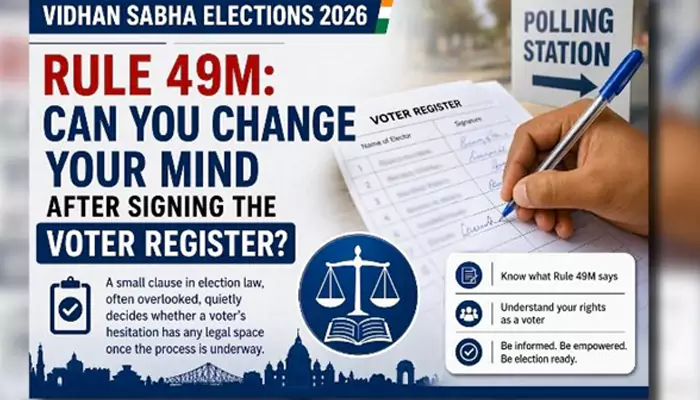
A small clause in election law, often overlooked, quietly decides whether a voter’s hesitation has any legal space once the process is underway.
There’s a brief, almost cinematic pause inside a polling booth. Finger inked, register signed, button in sight. And then - what if you’re unsure? It happens more often than people admit.
Under Conduct of Elections Rules, 1961, Rule 49M steps in at precisely this point. Not loudly, not dramatically. Just a firm procedural boundary.
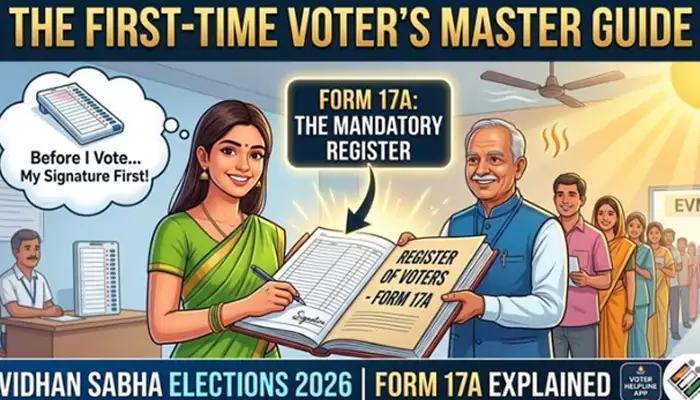
Put simply, once a voter has signed the register (Form 17A) and proceeds to cast their vote, the system doesn’t really allow a rewind.
What Rule 49M actually says (without the legal fog)
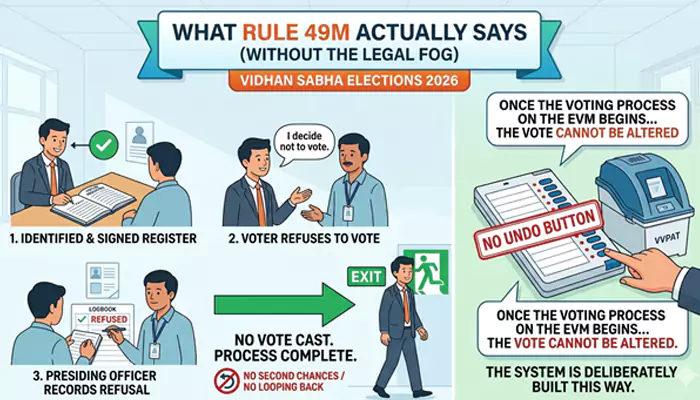
Rule 49M deals with a situation where a voter, after being identified and having signed the register, decides not to vote. Sounds simple enough, right? But the mechanics matter.
If a voter refuses to vote at that stage, the presiding officer records the refusal. The voter’s name is marked accordingly. No vote is cast. And that’s it. No second chances, no looping back into the queue for a rethink.
It’s a one-way street, more or less.
Now here’s the subtle catch - once the voting process on the Electronic Voting Machine (EVM) begins and the vote is cast, it cannot be altered. There is no “undo” button hiding somewhere. The system is deliberately built that way.
Why no second chances?
At first glance, it might feel a bit unforgiving. People change their minds all the time - over coffee orders, over messages, over life decisions. Why not here?
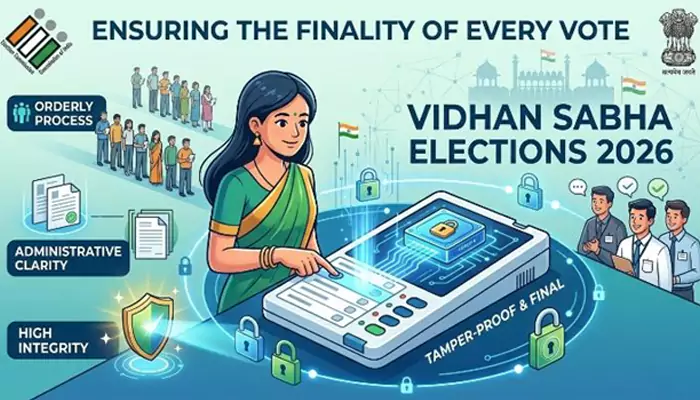
Because elections run on finality. Imagine millions of voters revisiting their choices mid-process. Chaos. Administrative gridlock. Questions over integrity.
So, the framework prioritizes clarity over flexibility.
And in the context of the Election Commission of India, this rigidity isn’t accidental. It’s designed to ensure that each recorded vote remains tamper-proof and beyond dispute.
A quick detour: confusion with NOTA
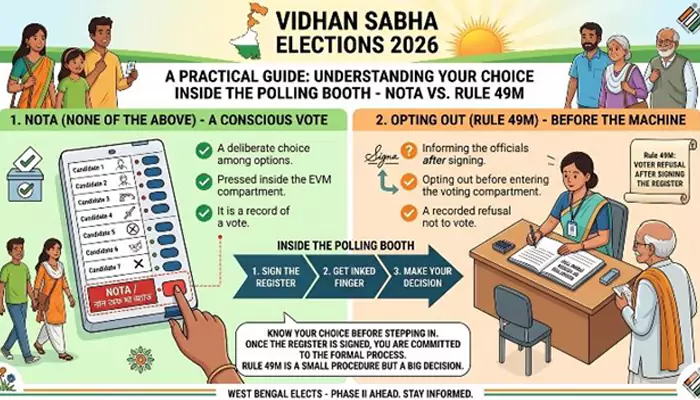
Some voters assume that hesitation can be solved with NOTA (None of the Above). Not quite the same thing.
NOTA is a conscious vote. A deliberate press of a button. Rule 49M, on the other hand, comes into play when a voter opts out after entering the formal process but before voting.
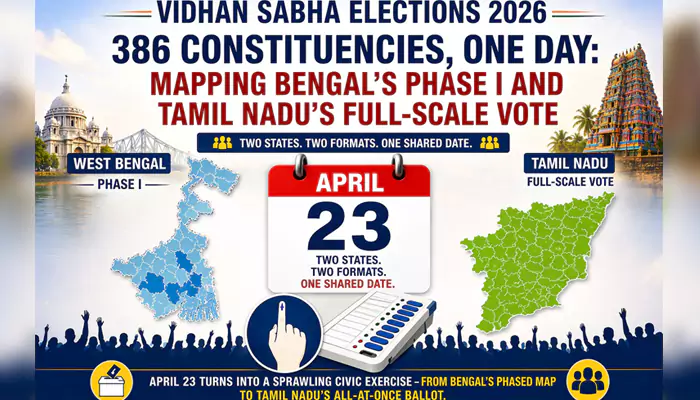
With Phase I of the West Bengal Vidhan Sabha Elections 2026 over and Phase II knocking around the corner, polling booths across districts are seeing first-time voters, elderly voters, hesitant voters - all navigating the same system.
In such moments, awareness matters. Not in a preachy way, just practically.
Know your choice before you step in. Because once the register is signed, the system assumes you’re ready. Fully ready. 49M is a small rule, tucked away in procedural text. Yet, in that fleeting second inside the booth, it quietly decides everything.