Remembering Bhagat Singh: The Fedora That Changed History: Decoding Bhagat Singh’s Famous Photo
- Devyani
- 6 months ago
- 2 minutes read
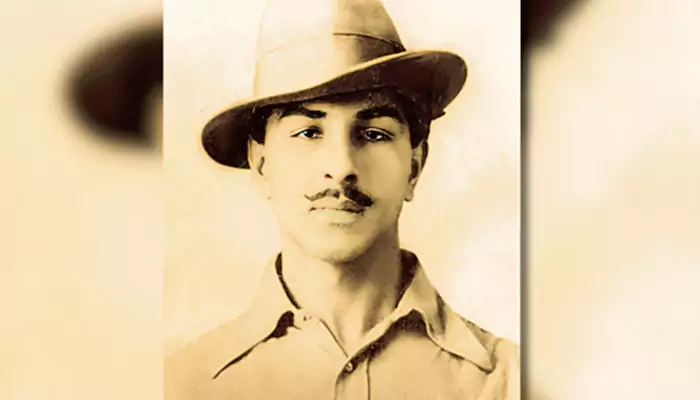
A felt hat, a rented studio backdrop, and a masterclass in visual rebellion - how a 21-year-old orchestrated the original viral image of India's freedom struggle.
Look closely at that photograph. You know the exact one. It’s stenciled onto the mudguards of local autos and painted across highway dhabas from Punjab to Kerala. A young guy, barely twenty-one, staring down the barrel of the camera lens with a slight, almost imperceptible smirk. He is wearing a fedora. Not a traditional turban. A European felt hat, tilted just a fraction.
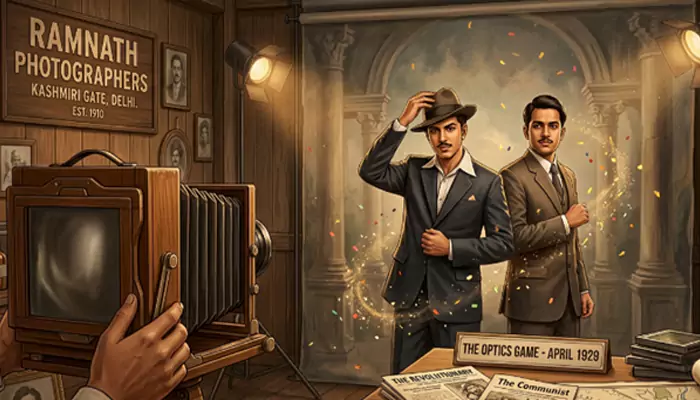
April 1929. The air in Delhi was thick with colonial anxiety. Bhagat Singh and Batukeshwar Dutt were preparing to toss smoke bombs into the Central Legislative Assembly. But the actual real genius - the part that still completely fascinates me wasn't the explosion itself. It was an optics game.
Knowing the imperial press would immediately label them as feral anarchists, they needed a visual counter-narrative. So, they walked into Ramnath Photographers at Kashmiri Gate. They posed.
The Semiotics of Felt
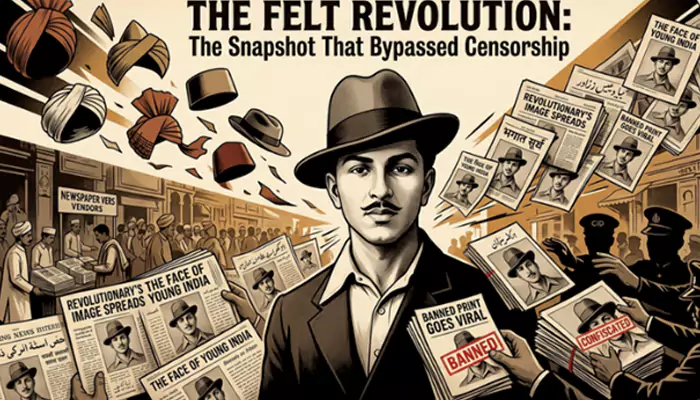
Why the hat, though? Some folks assume it was purely a disguise to slip past the CID. Perhaps. But I'd argue it was a deliberate, surgical strike on British stereotypes. The fedora stripped away all regional, religious, and caste markers. In that frame, he wasn't easily categorized as just a provincial agitator. He was a modern, secular, international revolutionary. A contemporary peer to the British establishment, staring right back into their eyes. And, frankly, looking a lot sharper doing it.
It worked. Oh, did it work.
The photograph was smuggled out and distributed to the press right alongside their pamphlets. It went viral - 1920s style. The British authorities frantically tried to confiscate the plates and ban the print, obviously. But you can't un-ring a bell. That single click of the shutter anchored his legacy in the public consciousness, bypassing the state's censorship entirely.
Beyond the Trigger
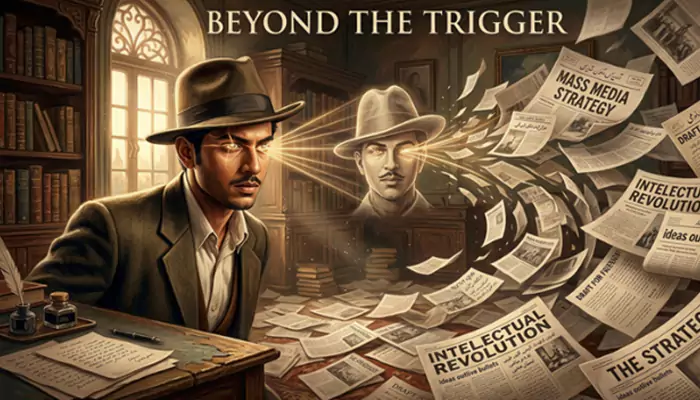
We have this habit of romanticizing martyrdom while completely glossing over the sheer intellect of the movement. Yet, that rented fedora tells a wildly different story. It shows a strategist who fundamentally understood the gravity of mass media long before PR agencies existed.
Sure, a picture speaks a thousand words. But this specific one? It drafted a revolution.