The Secret of the Blue Wheel: Decoding the Indian Flag’s Masterpiece on Ambedkar Jayanti
- Devyani
- 5 months ago
- 3 minutes read
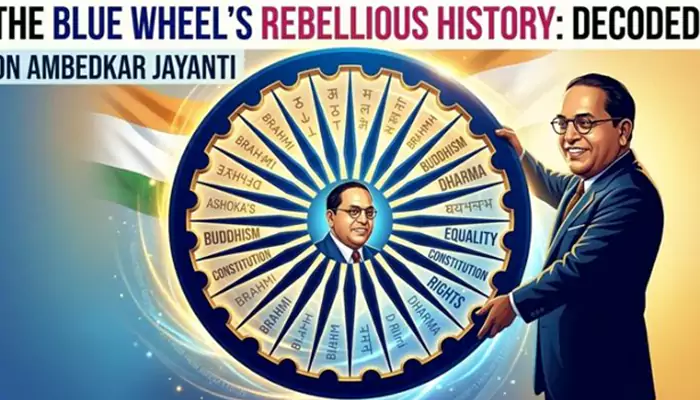
We stare at it every Independence Day, but the navy blue circle anchoring our tricolor holds a rebellious history we rarely talk about.
Look closely at a fabric Indian flag next time you buy one off a street vendor. Usually, the blue ink bleeds just a tiny bit into the white band. It’s funny, right? We get so hung up on the saffron and green - the bold, noisy colors - that the wheel in the middle almost feels like an afterthought. Just a neat geometric anchor.
But honestly? That navy blue chakra is probably the most radical thing on that entire piece of cloth.
The Charkha That Almost Was

April 14 rolls around - Ambedkar Jayanti. We see the statues get their annual wash. Garlands everywhere, political speeches on loop. Yet, we kind of forget Dr. B.R. Ambedkar’s quietest, most visual victory.
Back in the late 1940s, Gandhi’s spinning wheel (the charkha) was the absolute rockstar of Indian symbolism. It was already on the provisional flag of the Indian National Congress. Everyone just sort of assumed it would stay there permanently. I mean, who argues with the Mahatma's vision, right?
Well, Ambedkar did. And a few others on the drafting committee.
Motion Over Stagnation
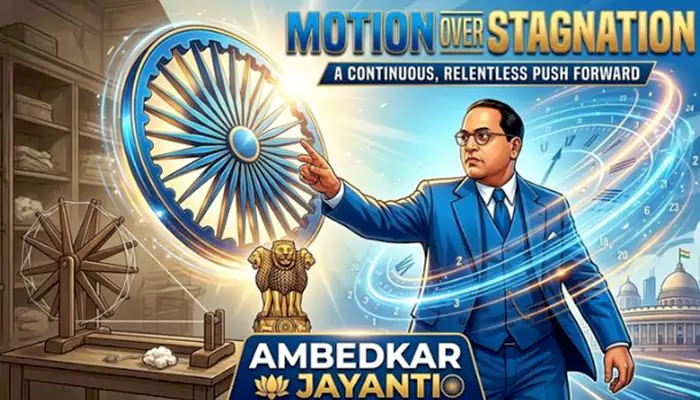
Here is where the genius actually kicks in. The charkha - while undeniably powerful for a grassroots boycott - was ultimately a tool of the past. It looked backward. Ambedkar, who spent his life championing the marginalized, knew this country needed a symbol that promised forward momentum instead.
Stagnation in India meant caste. It meant doing things "the way they’ve always been done" - which, frankly, was a waking nightmare for millions of people.
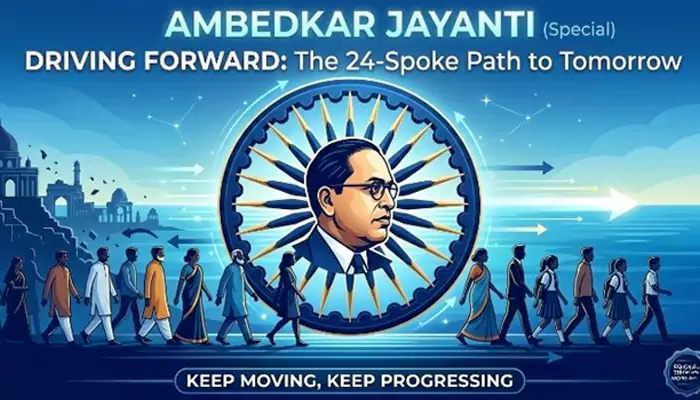
So, they pulled the Lion Capital of Ashoka out of the historical archives. The Dharma Chakra.
Twenty-four spokes.
Representing twenty-four hours of the day. A continuous, relentless push forward. It represented the law of dharma, yes, but also the universal law of motion. Ambedkar famously noted that a nation that stops moving, dies. The wheel was a polite but firm rejection of going backward.
The Blue Ink Equalizer
And why navy blue?
It is the color of the sky and the ocean. Boundless. Unlike saffron or green, it isn't tied to any one community's specific religious palette. It’s sort of the great equalizer - which is exactly the level playing field Ambedkar spent his entire life trying to build.
Next time you see that blue wheel, maybe don’t just see a design element. See a deliberate, brilliantly negotiated choice to keep pushing a stubbornly traditional country into tomorrow. It’s a 24-spoke reminder that our survival depends entirely on our ability to keep moving.