Your Jan 1st Resolution Failed? Try the Tibetan 'Losar Reset' for a Second Chance
- Devyani
- 1 month ago
- 3 minutes read

The Gregorian calendar owes you nothing, but the Tibetan New Year might just give you back your sanity - and your goals.
Let’s be brutally honest for a second. How is that expensive gym membership faring? If you’re like most of us, that "New Year, New Me" energy evaporated somewhere around the second week of January, leaving behind nothing but guilt and a very dusty air fryer.
By mid-February, the pressure to have your life together feels heavy. But here is a little secret: the universe doesn’t actually care about January 1st. It’s just a date on a square of paper. If you’ve already "failed" your resolutions, I’m here to tell you that you’ve just been operating on the wrong clock.
Welcome to Losar.
What on Earth is Losar?

Losar is the Tibetan New Year, and this year, it lands right when we need it most. While the West is busy mourning defunct resolutions, millions are preparing for a "Reset" that is far more profound than just "eating less carbs."
Losar isn't just a day; it’s a psychological scrubbing. In Tibetan culture, the days leading up to the new year are dedicated to Gutor. This isn't just spring cleaning - it’s an aggressive eviction of last year’s "bad vibes."
People sweep their houses, yes, but they also settle old debts, mend fraying friendships, and literally throw out the physical clutter that represents mental stagnation.
Perhaps there’s a lesson here? Maybe your resolution failed because you tried to build a new habit on top of old, unaddressed baggage.
The Art of the 'Clean Slate'

I believe the beauty of the Losar mindset is its focus on the collective rather than the solitary. Western resolutions are often selfish - my weight, my money, my productivity. Losar asks: "How can I clear the path for everyone?"
Traditional families prepare Kapse (deep-fried biscuits) and offer Chemar (a mixture of roasted barley flour and butter). There is a ritualistic sense of abundance. It’s hard to feel like a failure when you are focused on the sweetness of a biscuit and the warmth of a community.
If you want to try a "Tibetan Reset," start small. Don’t commit to a 5 AM marathon. Instead, try the practice of Lhapso - burning incense to purify your immediate space. It sounds a bit woo-woo, sure, but the olfactory shift can genuinely trick your brain into thinking, "Okay, that chapter is done. We are starting now."
Why a Second Chance Matters
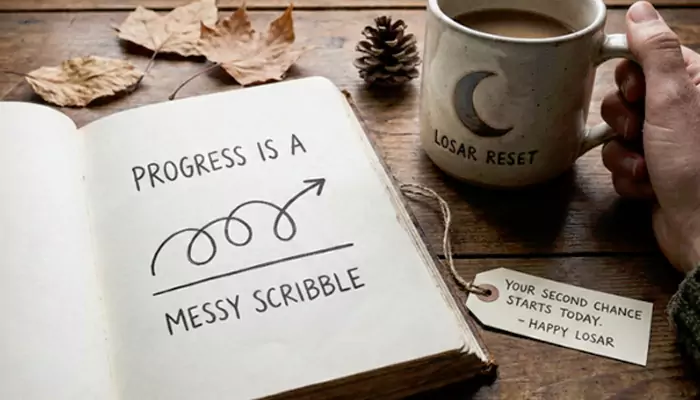
Why do we give up so easily? Usually, it's because we think progress is a straight line. It isn't. It’s a messy, looping scribble.
The Tibetan calendar, based on lunar cycles, acknowledges that nature has rhythms. Sometimes the moon is full; sometimes it’s dark. By aligning your "Reset" with Losar, you’re admitting that you are part of that cycle. You aren't a machine that failed a software update; you’re a human who needed a little more time to thaw out from winter.
So, if you’re reading this while staring at a discarded to-do list, take a breath. Pull your shoulders back (as Darwin or a Tibetan monk might suggest). You didn't fail. You just started too early. Happy Losar. Your second chance starts today.