Satyajit Ray’s Death Anniversary: How the Everyday Bengali Kitchen Became His Most Powerful Storytelling Tool
- Soham Halder
- 5 months ago
- 3 minutes read
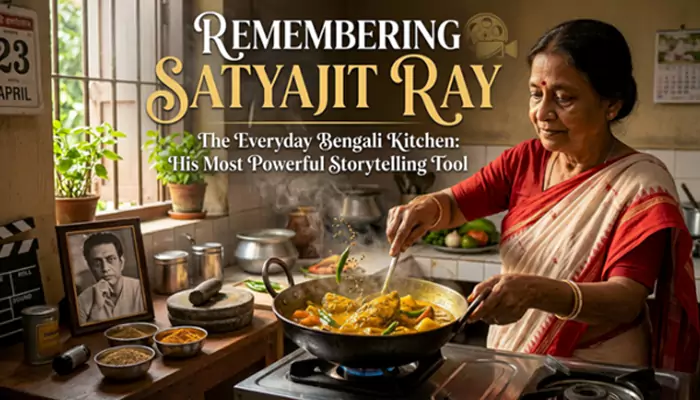
Forget the sweeping landscapes and grand dialogues. The real drama in a Satyajit Ray masterpiece usually started with the splutter of mustard oil.
April rolls around, and suddenly every film student is waxing poetic about Satyajit Ray’s camera angles. Fair enough. The man was a visual genius. But I always find myself drawn to something far more visceral when I watch his films. The kitchens.
The Hearth as a Battlefield
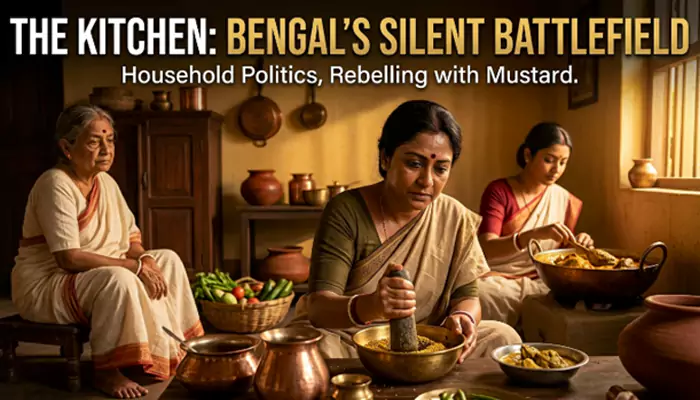
Think about it. In a Bengali household, the rannaghor (kitchen) is never just a place to boil rice. It’s the epicenter of household politics, quiet rebellions, and unspoken grief. Ray knew this perfectly. He didn't just point his lens at the cooking; he captured the socio-economic pulse of the family through it. When Sarbojaya struggles in Pather Panchali, her anxiety isn't just in her eyes. It’s in the meager portions, the desperate, hollow scraping of utensils against brass.
There’s a profound intimacy in those scenes. Watching a character quickly whip up a rich Doi Katla for a beloved guest, or silently grinding mustard seeds for a simple Katla Posto on a random Tuesday afternoon - these aren't just background actions to fill screen time. They are dialogue without words. It shows exactly who is loved, who is merely tolerated, and who holds the actual power in the domestic hierarchy.
More Than Just Aesthetic Props
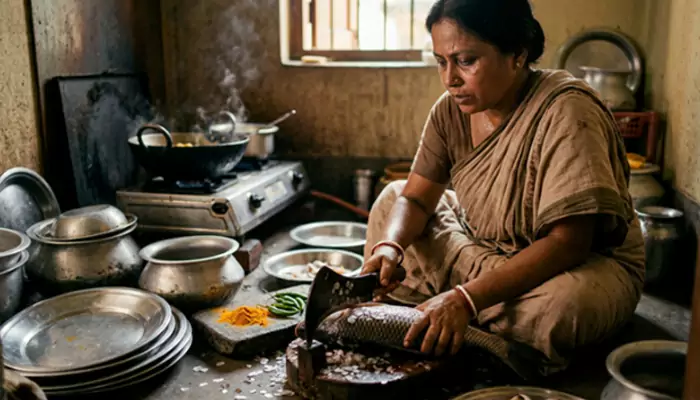
Modern cinema often treats food as an aesthetic prop. A beautifully lit, highly stylized distraction. Ray, on the other hand, treated food as a ticking clock. Will the meal be enough? Who gets the largest piece of fish? These seemingly mundane questions carried the absolute weight of the world for his characters.
I reckon he understood that the quickest way to a Bengali audience's psyche was right through their stomachs. You can practically smell the turmeric and green chilies roasting through the celluloid. He managed to elevate the everyday, repetitive tasks of chopping vegetables and scaling fish into high art. It feels real because, well, it is real. He deliberately left the messiness of life intact - the minor redundancies of conversation, the erratic clatter of plates, the sweat on a brow.
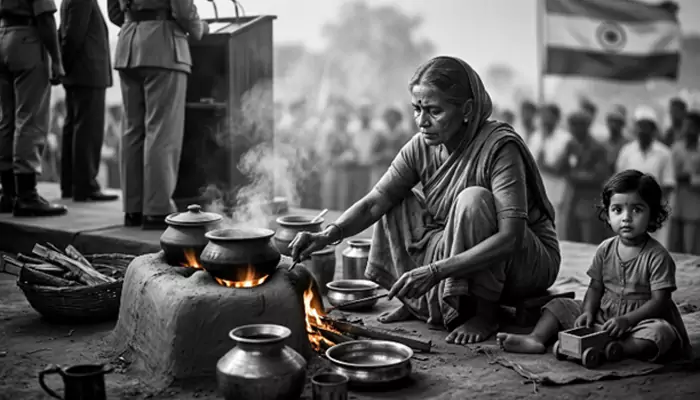
So, later this week, as we inevitably see the black-and-white stills flooding our timelines for his death anniversary, maybe look past the iconic profiles and the brooding stares. Look at the corners of the frame.
Look at the women sitting on the floor, managing the unoon (you know, those old-school mud stoves) while the world shifts around them. That’s where the true masterclass in storytelling was happening all along.