Charlie Chaplin’s Birthday: How The Silent Tramp Built Raj Kapoor’s Post-Colonial Bollywood Persona From Scratch
- Devyani
- 5 months ago
- 3 minutes read
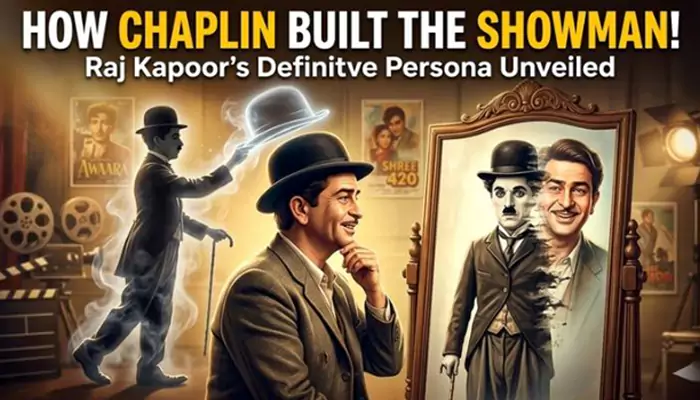
Baggy trousers, a borrowed bowler hat, and an uncanny waddle. How London’s most famous cinematic export gave India’s 'Showman' his definitive soul.
Let’s just state the obvious right up front. If you look closely at Raj Kapoor’s most iconic silhouette - the rolled-up pants, the slightly-too-tight jacket, that duck-like gait - you aren't really looking at Mumbai. You are looking at Victorian London.
Today marks Charlie Chaplin’s birthday. We usually talk about his genius in a Western vacuum, right? The Little Tramp battling industrial gears or eating a shoe for dinner. But I believe his most fascinating legacy actually unfolded thousands of miles away, right in the heart of a newly independent India.
The Borrowed Vagabond
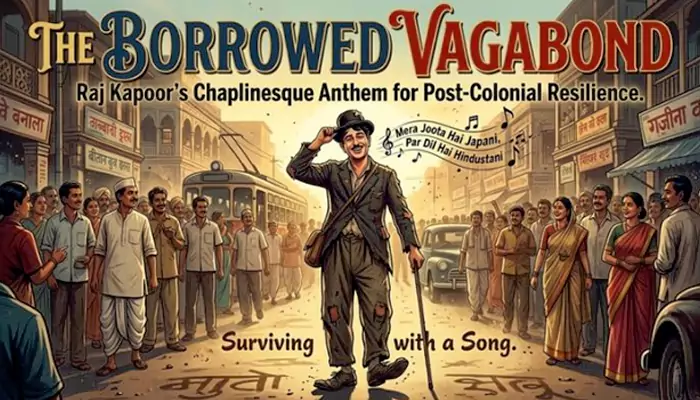
Kapoor didn't just borrow Chaplin’s wardrobe. He flat-out hijacked his entire psychological playbook.
Think about the early 1950s. The British had just left. The country was navigating this messy, hopeful, yet incredibly confusing post-colonial hangover. Millions of people were pouring into urban centers looking for work. What kind of cinematic hero does a crowd like that actually need? A wealthy prince? Absolutely not.
They needed a survivor.
In films like Awaara (1951) and Shree 420 (1955), Kapoor introduced Raju. He was the classic Chaplinesque underdog - penniless, perpetually hungry, yet somehow stubbornly optimistic. He’d get knocked down into the literal mud, dust himself off, and sing a song about his shoes being Japanese but his heart remained proudly Hindustani. It was brilliant.
More Than Just Mimicry
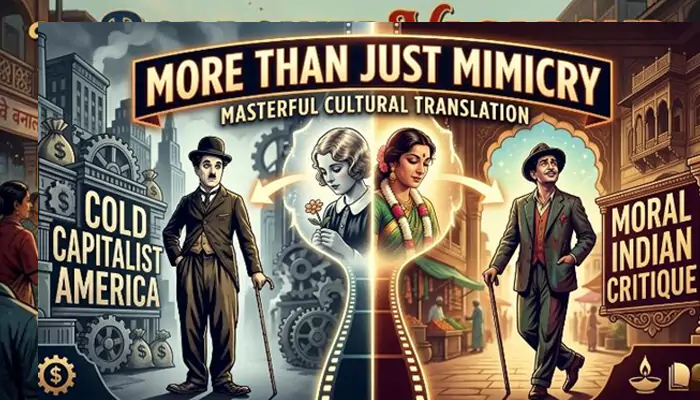
Now, skeptics might occasionally brush this off as lazy plagiarism. I strongly disagree. It was a masterful cultural translation.
Chaplin’s Tramp navigated the cold, hyper-capitalist machinery of America.
Kapoor’s Tramp, on the other hand, navigated the moral corruption of the Indian bourgeoisie. The physical comedy served as a Trojan horse. You laughed at the funny walk, but then suddenly, Kapoor hits you with a devastating critique of poverty or class inequality. The humor softened the ideological blow.
He even adopted Chaplin’s knack for tragic romance. Notice how Kapoor’s characters always look up at the leading lady (usually Nargis) as if she is a literal goddess walking on earth? It’s the exact same starry-eyed reverence the Tramp held for the blind flower girl in City Lights.
An Enduring Echo
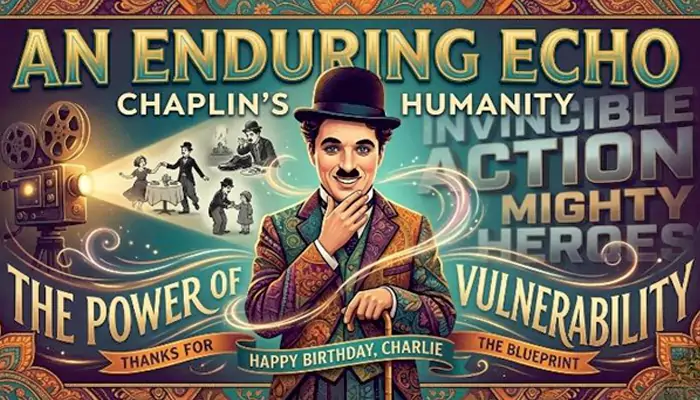
It seems almost impossible today to pull this off. We live in an era of hyper-muscular, invincible action stars throwing cars at each other. Vulnerability isn't exactly trending at the box office right now.
Yet, the emotional resonance of that Chaplin-Kapoor hybrid endures. When I rewatch those old black-and-white classics, the sheer humanity of it all catches me off guard. Kapoor took a British-American icon, wrapped him in local fabric, and gave a struggling nation permission to smile through its growing pains.
That, perhaps, is the ultimate magic trick. Happy birthday, Charlie. Thanks for the blueprint.