Here are today’s most important updates from the realm of Science and Space.
Harbinger Satellite Signals Success as Bellatrix Establishes Link
I...

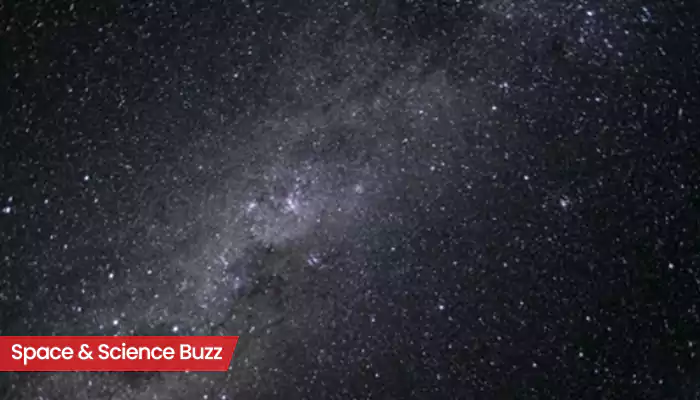
Here are today’s most important updates from the realm of Science and Space. A ‘Heavenly’ Glimpse: NASA Shares Milky Way From Space The Artemis II astronauts on Tuesday (April 7) captured a breathtaking view of our galaxy, the Milky Way, stretching across deep space. The image, which was taken after a successful lunar flyby, shows a starfield filled with thousands of stars and shining clouds of dust. "The Milky Way's elegant spiral structure is dominated by just two arms wrapping off the ends of a central bar of stars," NASA wrote as the caption, describing the magical Milky Way. "Spanning more than 100,000 light-years, Earth is located along one of the galaxy's spiral arms, about halfway from the center.” Volcano Alert: One of the World’s Most Dangerous Is Reactivating A powerful underwater volcano near Kyushu is slowly refilling with magma, according to a new study, raising fresh questions about the ...

Here are today’s most important updates from the realm of Science and Space. A ‘Heavenly’ Glimpse: NASA Shares Milky Way From Space The Artemis II astronauts on Tuesday (April 7) captured a breathtaking view of our galaxy, the Milky Way, stretching across deep space. The image, which was taken after ...

Here are today’s most important updates from the realm of Science and Space. A ‘Heavenly’ Glimpse: NASA Shares Milky Way From Space The Artemis II astronauts on Tuesday (April 7) captured a breathtaking view of our galaxy, the Milky Way, stretching across deep space. The image, which was taken after ...

Here are today’s most important updates from the realm of Science and Space. A ‘Heavenly’ Glimpse: NASA Shares Milky Way From Space The Artemis II astronauts on Tuesday (April 7) captured a breathtaking view of our galaxy, the Milky Way, stretching across deep space. The image, which was taken after ...

















buzztribe.news is our initiative through which we wish to create a journalistic impact that acts as the foundation of an informed and happy society. In a world that’s changing fast, joy is fleeting, and the news is disturbing, we bring you your daily dose of buzzworthy news that has the “joy of knowledge” and the “happiness in truth” at its core.
More from Buzztribe News
Get in Touch
39A,
Shanti Kunj Main, Sector D,
Vasant Kunj,
New Delhi
110070
India