Here are today’s most important updates from the realm of Science and Space.
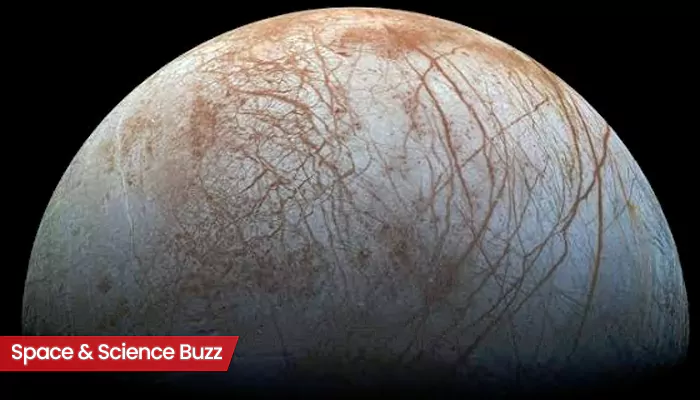
Ocean World Next Door: Why Saturn’s Moon Enceladus Has Scientists Excited About Life
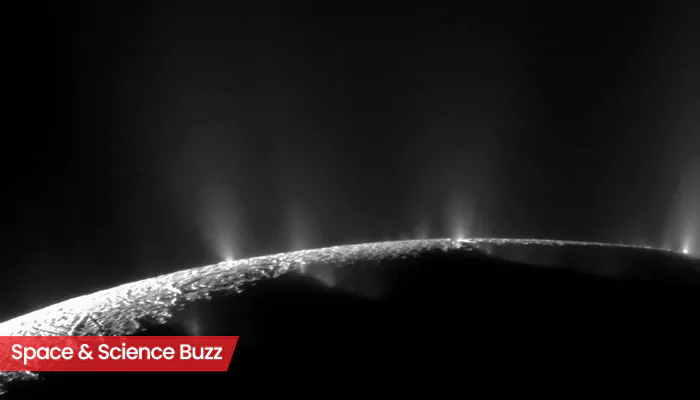
Scientists have already claimed that Enceladus, Saturn's icy moon, is a promising candidate in the search for extraterrestrial life. Recent research has given a boost to existing findings, with scientists discovering complex organic molecules in the icy plumes erupting from its subsurface ocean. The findings are based on analysis of data from NASA's Cassini spacecraft, which orbited Saturn from 2004 to 2017. It found evidence of organic compounds, which were previously undetected. The compounds appear to be a plume of ice particles ejected from the ocean, lying beneath the frozen shell of Enceladus. According to NASA, "The newly detected compounds included those from the aliphatic and cyclic ester and ether families, some with double bonds in their molecular structures. Together with the confirmed aromatic, nitrogen- and oxygen-bearing compounds, these compounds can form the building blocks to support chemical reactions and processes that could have led to more complex organic chemistry."
From Dust to Worlds: Hubble Reveals the Universe’s Largest Planet Nursery
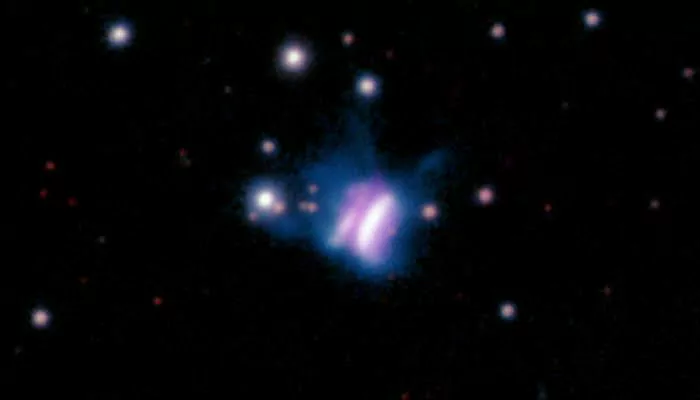
Astronomers used NASA's Hubble Space Telescope to capture stunning images of the largest planet-forming disk ever observed, which is nicknamed "Dracula's Chivito". Located approximately 1,000 light-years from Earth, this massive disk spans nearly 400 billion miles, roughly 40 times the diameter of our solar system. The disk, officially designated IRAS 23077+6707, is surprisingly chaotic and turbulent, with wisps of material stretching far above and below the disk. This asymmetry is likely due to dynamic processes shaping the disk, such as interactions with its surroundings.
Blood-Red Sky Over the Pacific Sparks Mystery: What Caused the Strange Glow?
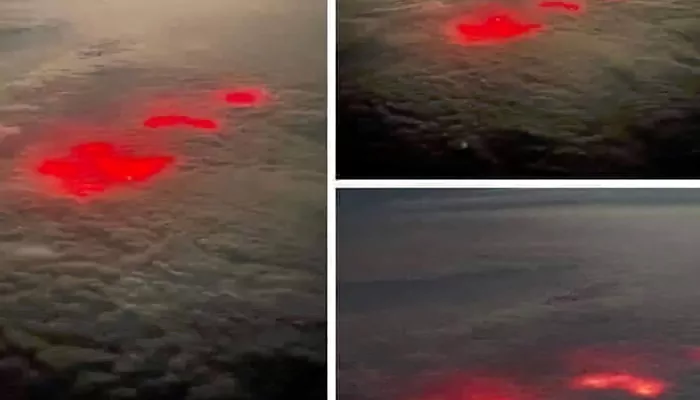
Cruising far above the dark Pacific, a pilot recently captured photographs showing a startling red hue splashed across the nighttime sky. The glow, both intense and widespread, stemmed not from nature but from an armada of Chinese fishing ships. Hundreds of vessels, each outfitted with red LED arrays, worked through the hours of darkness, luring giant squid from the ocean’s depths. Clusters of crimson beams, distinguishable even from great altitude, marked the tightly packed fishing fleets. Vessels travel in coordinated groups, forming a spectacle now synonymous with industrial squid harvests. The methodical arrangement of boats and lights illustrates how fishing strategies have shifted in direct response to fluctuating marine stocks. Red LED illumination is chosen because it draws in giant squid, exploiting their response to specific wavelengths.
The Brain’s Hidden Triggers Behind Risky Decisions, Revealed
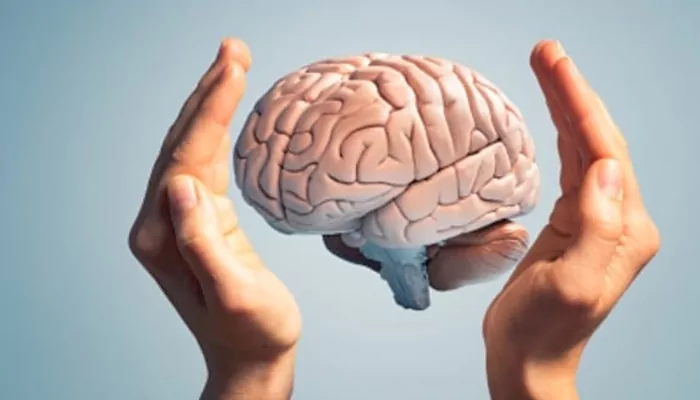
Researchers at the University of Bologna may have found part of the answer, linking it to how the brain responds to certain biological cues, according to reports. The team studied associative learning and maladaptive decision-making. Their research shows that the cues individuals rely on when making choices can determine whether the outcome is good or bad. People who rely more on surrounding cues, such as images or sounds-a process called Pavlovian learning-often have difficulty updating their beliefs or changing learned associations, especially when these cues indicate risky outcomes. Over time, this can lead to consistently poor decisions.