Air Pollution's Lethal Grip: India's Respiratory Health Under Siege as 42 Cities Top Global Toxicity Charts
- Admin
- 2 years ago
- 4 minutes read
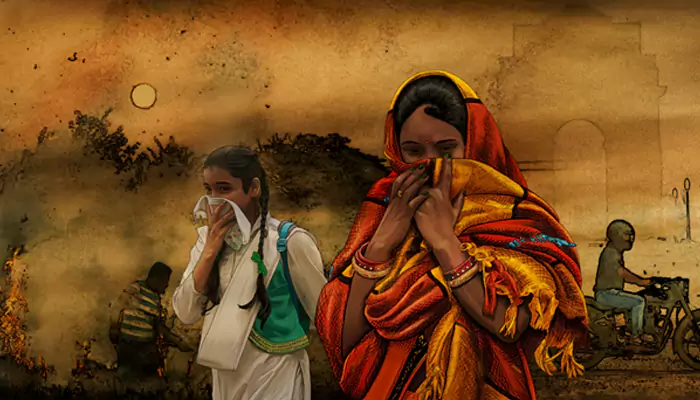
In the recent 2023 World Air Quality Report, India claimed the unenviable position as the third most polluted nation, trailing behind Bangladesh and Pakistan. The annual PM2.5 concentration averaged 54.4 micrograms per cubic metre. This marked a deterioration from 2022 when India stood at the eighth spot with 53.3 micrograms per cubic metre.
The report unveiled an alarming revelation about Indian cities, with a staggering 42 out of 50 of the world's most polluted urban areas. Begusarai, a metropolitan in Bihar, emerged as the worst offender with a drastic surge in PM2.5 concentration from 19.7 to 118.9 micrograms per cubic metre. Guwahati and Delhi followed suit with significant escalations in air pollution levels. The data, meticulously compiled from over 30,000 monitoring stations globally, underscores the urgent need for stringent measures to combat air pollution.
Against this backdrop, let’s explore the health implications of India's worsening pollution levels, focusing on respiratory illnesses and other health conditions affecting the population.
Urbanization Challenges: Air Pollution and Climate Crisis in Developing Nations like India
.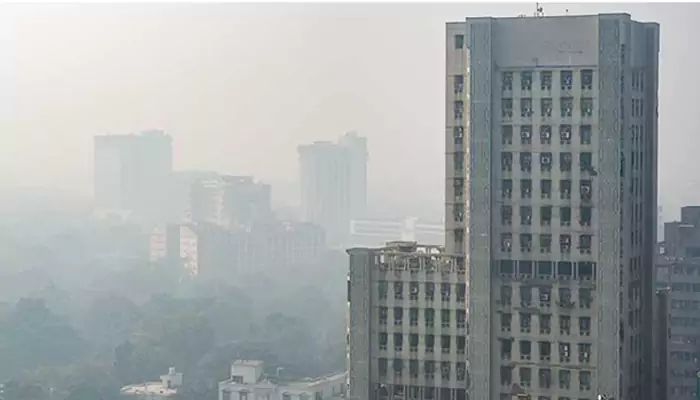
Air pollution and climate change pose significant threats to the burgeoning urban landscapes of today. In developing nations like India, transitioning from primarily rural to increasingly urban settings presents critical challenges in climate action and sustainable development. Urbanization, coupled with population growth and industrial expansion, exacerbates pollutant emissions and aerosol concentrations. This surge in urbanization is a major contributor to the high aerosol levels in the Indian sub-continent. According to a World Health Organization (WHO) report, over seven million people globally succumb to diseases linked to PM2.5 pollution. India, as a swiftly advancing nation with a growing populace, grapples with severe air quality issues.
Urban Air Pollution in Indian Megacities: Causes and Impacts
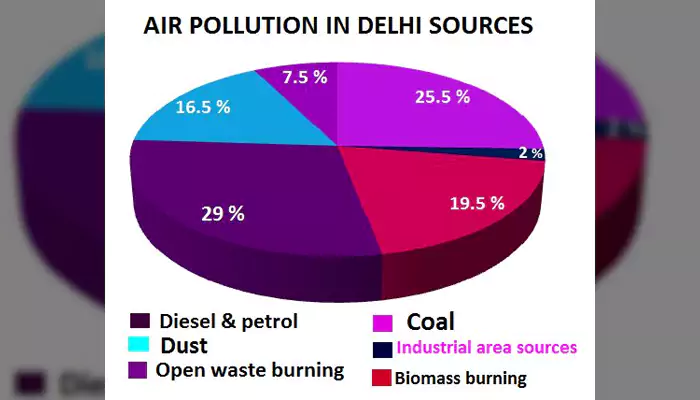
Air pollution is a pressing concern in megacities where pollution levels often exceed permissible limits, posing significant health risks to residents. Indian metropolitan cities suffer from unhealthy conditions due to air pollution. The continuous rise in urban air pollution is a critical environmental issue in Indian megacities.
Major air pollutants in urban areas include primary pollutants like particulate matter (PM2.5, PM10, SPM, RPM), SOx, NOx, CO, ammonia, and dust particles, as well as secondary pollutants like ozone, smog, and PANs.
Developing nations like India, undergoing rapid urbanization, face increased air pollution due to inadequate transportation management and unplanned industrial distribution. Congestion on city roads reduces vehicular speed, leading to higher vehicular emissions and air pollution. Unplanned urbanization, industrialization, and population growth contribute to worsening air pollution, posing health risks.
In Indian cities, air pollutants come from natural sources like long-range transport of desert dust from arid regions, particularly during summer and pre-monsoon seasons.
Vehicular emissions (95%) are a prevalent source of high NO2 concentrations, followed by industries and fuel burning, contributing to urban air pollution. Combustion of low-quality fuel in Indian cities causes SO2 emissions. Other sources include emissions from crude oil wells, landfill fires, industrial activities like coal mining and thermal power plants, and road dust.
Toxic pollutants like particulate matter and greenhouse gases worsen air quality, with additional contributions from aerosols from deserts, oceans, forest fires, and volcanoes. Black carbon and polycyclic aromatic hydrocarbons exacerbate air quality issues, particularly during agricultural residue-burning seasons.
Over the past few decades, there has been a significant degradation in the air quality of many Indian cities, such as Kolkata and Delhi, surpassing the standards set by the CPCB and WHO. Research indicates that gaseous pollutants in Indian cities often exceed daily and annual average values. Particularly, the Indo-Gangetic plain faces a substantial burden of ambient air pollution, contributing to various air pollution-related diseases in India.
Health Impacts of Air Pollution
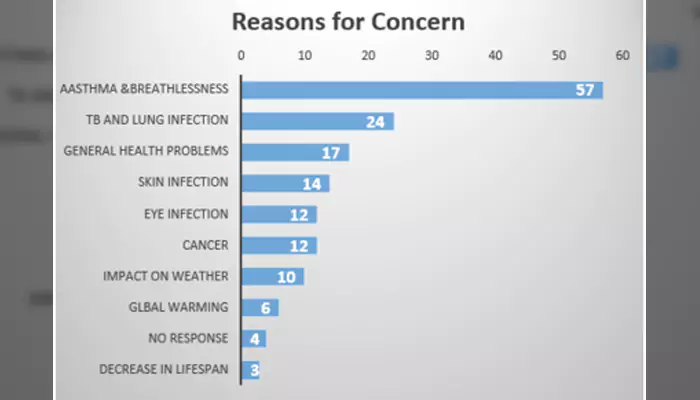
The health impacts of air pollution in developing countries and urban cities are severe, with both short-term and long-term exposure leading to a range of respiratory and cardiovascular issues. These impacts include irritation to the eyes, throat, and nose, respiratory infections such as pneumonia and bronchitis, chronic respiratory diseases, heart-related problems, and even lung cancer. Vulnerable groups such as children, the elderly, and pregnant women are particularly at risk, with children being highly affected due to their underdeveloped lungs at birth. Moreover, individuals already suffering from health conditions like heart and lung diseases are more susceptible to the adverse effects of air pollutants.
Contributors to Air Pollution
Particulate matter and black carbon are among the major contributors to air pollution, with emissions from various sources exacerbating the problem. The mass concentrations of pollutants like black carbon vary significantly depending on factors such as agricultural practices and industrial activities.
Urgent measures are required to mitigate the adverse effects of air pollution on public health and the environment. This necessitates a multi-faceted approach involving stricter regulations, technological innovations, and public awareness campaigns to address the root causes of air pollution and safeguard the well-being of current and future generations.