The Competitiveness Mandate: How Budget 2026 Plans to Modernize India’s Tax Framework
- Devyani
- 8 months ago
- 3 minutes read
Tax season's coming. But this time, it's less about dodging the taxman and more about dodging irrelevance in a global race.
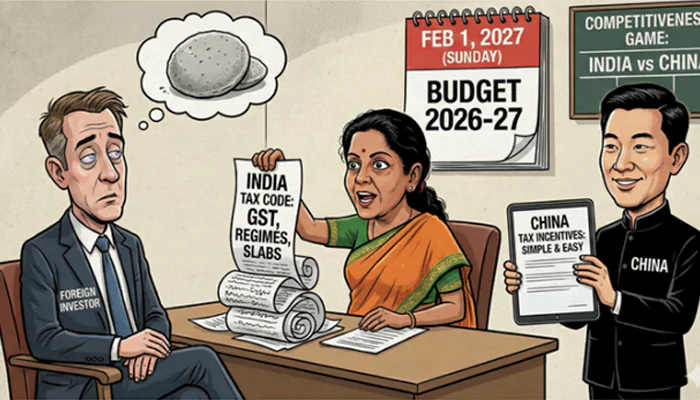
Ever tried explaining India's tax code to a foreign investor? You start with the basics, GST slabs, income tax regimes, and suddenly their eyes glaze over like they've bitten into an overcooked idli. Now imagine doing that while China's got a sleek, one-page tax incentive sheet ready. That is the competitiveness game Budget 2026-27 is gearing up for, with Finance Minister Nirmala Sitharaman set to unveil it on February 1, her ninth straight presentation and the first Sunday budget since 2017.
The Halwa Ceremony kicked off preparations on January 27, signaling the final sprint. Against a projected GDP growth of 7.6 percent, the focus isn't fireworks; it is fine-tuning a tax framework that feels like it was stitched together from three different tailors. Why now? Because Viksit Bharat by 2047 does not happen with creaky compliance wheels.
Simplification: Fewer Slabs, More Sanity
Picture this. GST with its 5-12-18-28 percent maze, income tax offering old vs new regimes like a choose-your-poison menu. Experts are betting big on consolidation, mirroring GST's own slab rationalisation last year. Surabhi Marwah from EY India points out the government's clear intent to streamline, possibly hiking standard deduction to Rs 1 lakh and LTCG exemption to Rs 2 lakh.
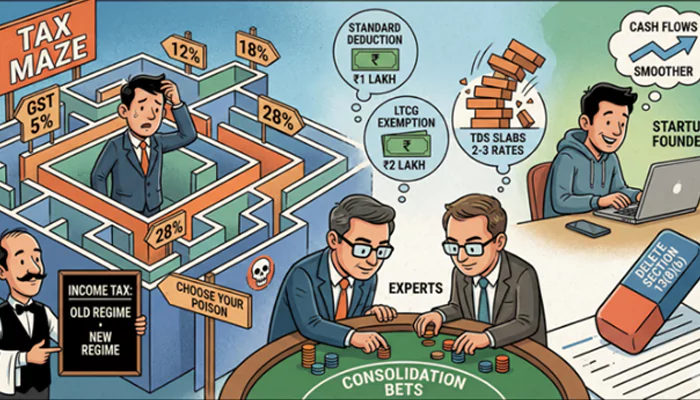
Direct taxes might see TDS slabs collapse to 2-3 rates, easing the paperwork hell for salaried folks and small businesses. Feels basic, right? Yet it is the kind of tweak that keeps a startup founder from throwing their laptop out the window. And for indirect taxes, deleting Section 13(8)(b) of IGST Act could flip intermediary services' place of supply to the recipient's location, slashing cross-border litigation. Boom. Cash flows smoother.
Manufacturing and MSMEs: Tax as Rocket Fuel
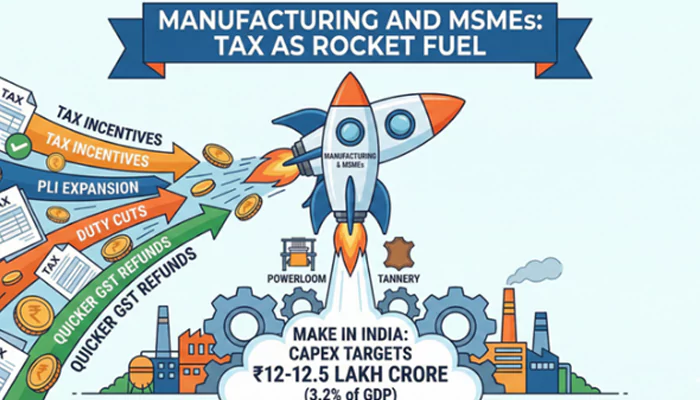
Tangent time. Remember when "Make in India" was just a slogan? Now it is capex targets hitting Rs 12-12.5 lakh crore, about 3.2 percent of GDP. Budget whispers include enhanced depreciation for factories, PLI expansion into apparel, and duty cuts on yarn for textiles. MSMEs, those job engines grinding away in Surat's powerlooms or Kanpur's tanneries, want quicker GST refunds and easier ITC claims.
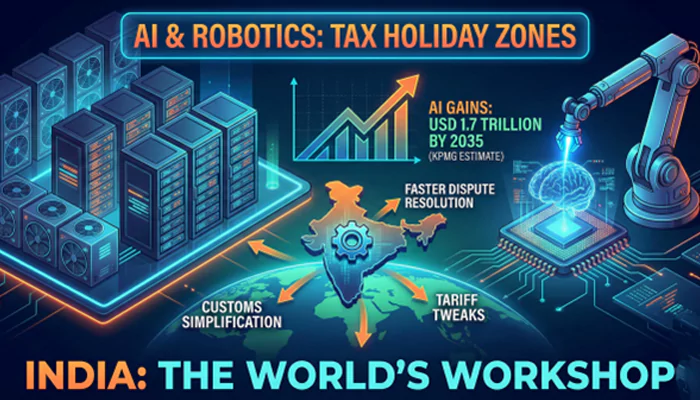
AI and robotics? Tax holidays to lure the next big data centre build-out. KPMG folks reckon this could unlock USD 1.7 trillion in AI gains by 2035. Customs simplification, faster dispute resolution, tariff tweaks; all aimed at making India the workshop the world calls first.
The Global Stare-Down
Here is the kicker. While we debate slabs, Vietnam offers 15 percent corporate tax to electronics giants, and Singapore's GST refunds are poetry in motion. India's playing catch-up, but smartly. Inverted duty refunds expanding, post-sale discounts eased, export thresholds lifted. Fiscal deficit pegged at 4.8 percent for 2025-26 RE, setting a tight leash.
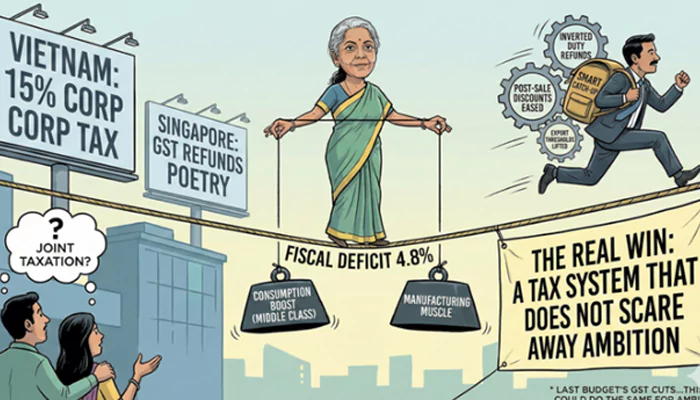
Sitharaman's balancing act, consumption boost via middle-class sops, manufacturing muscle via incentives. Will we see joint taxation for couples, like some are whispering? Maybe. But the real win is a tax system that does not scare away the very jobs it is meant to create. Slight digression, but true. Last budget's GST cuts freed up working capital; this one could do the same for ambition.
On February 1, as the Sunday sun rises over Parliament, watch for those quiet moves that turn tax from a chore into a competitive edge. India is not just collecting revenue anymore. It is building a runway.


.webp)
.webp)