
2026 and the Rise of Skill-based Career : Most Promising Non-Traditional Jobs to Watch For
- Devyani
- 9 months ago
- 3 minutes read

Degrees are losing their monopoly. In 2026, it’s the stack of skills in a person’s toolkit - not just the logo on a college sweatshirt - that’s quietly reshaping careers.
Why 2026 belongs to skillsAcross sectors, employers are shifting from “What did you study?” to “What can you actually do, and how fast can you learn something new?” The World Economic Forum estimates that almost 39% of core skills in today’s jobs will change by 2030, which is forcing companies to prioritise resilience, agility, tech literacy and problem solving over linear CVs.
Research on skills‑first approaches finds that roles are being broken down into tasks and capabilities, allowing candidates from unconventional backgrounds to move into high-growth areas if they can show proof of competence.
Non-traditional jobs to watch
Some of the fastest‑rising career paths don’t fit neatly into old-school job descriptions. A few worth tracking in 2026:
AI workflow designers and automation coaches

They map everyday business processes and teach teams how to blend human judgement with AI tools instead of replacing people outright.
Climate-tech field specialists

They specialise in electric mobility, carbon tracking, climate‑smart agriculture and water-tech, turning policy goals into real-world projects and startups.
Creator-economy producers and community strategists
They manage podcasts, niche newsletters and short‑video brands, often as independent operators or through agencies rather than legacy media houses.
Cohort-based course mentors

Bootcamp Trainer
Bootcamp trainers and skills-coaching entrepreneurs help workers pivot into data, product, green jobs and design through short, intensive programmes instead of long degrees.
Fractional specialists
UX leads, growth marketers, even “gig CFOs” - who work with multiple startups or global capability centres at once, riding the boom in India’s gig and platform economy.
These roles are messy at the edges, evolve quickly and often blend freelancing with part‑time employment, but that’s exactly why they’re becoming aspirational for a generation that values flexibility as much as salary.
India’s skills-first moment
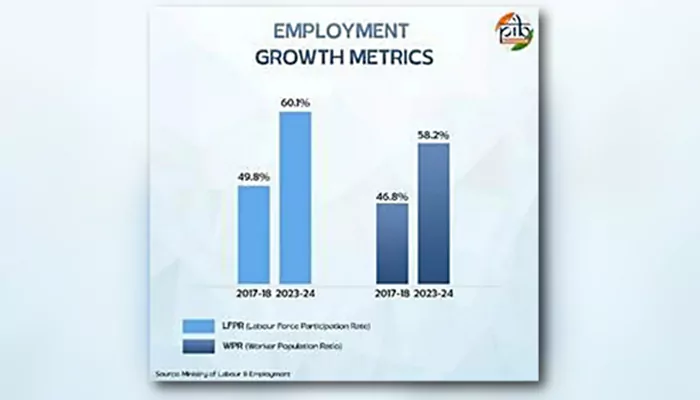
Source: Ministry of Labour and Employment
India’s own numbers tell the story: government data suggests around 17 crore jobs have been added in six years, with strong growth in startups, global capability centres and platform work. Policy briefs project the country’s gig workforce to more than double to about 2.35 crore workers by 2029–30, with rising shares in high‑skill and creative services.
The India Skills Report notes that over half of secondary and tertiary students are expected to receive some form of vocational or skills training by the mid‑2020s, backed by Skill India, NEP reforms and digital learning platforms.
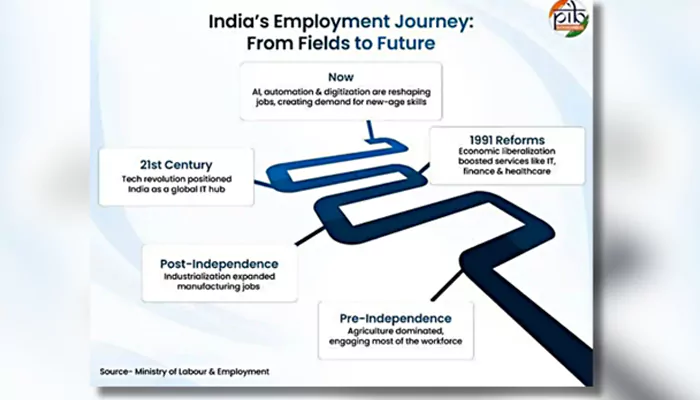
Source: Ministry of Labour and Employment
How to ride the 2026 wave
For anyone planning a move into these non‑traditional paths, the playbook is less about one grand qualification and more about stacking smaller, verifiable wins. Short courses, live projects, open‑source contributions, portfolios and skill badges from credible platforms all help recruiters see real capability in a crowded feed.
Staying employable now means treating learning as a permanent side‑gig - rotating through new tools, testing them in small experiments, and building a personal brand that shows curiosity and craft rather than just job titles.






.webp)
.webp)
.WEBP)
.webp)
.webp)