Shekhar Kapur Birthday Special: Masoom to Bandit Queen - The Fearless Films That Defined a Master Director
- Devyani
- 2 months ago
- 3 minutes read

Shekhar Kapur turns 80 today, and his filmography remains a mosaic of risks, beauty, and rebellion - never content to chase easy applause.
You might not imagine the guy who gave the world Bandit Queen once trained as an accountant in the UK. In the late ‘70s, bored stiff by balance sheets and boardrooms, Kapur boomeranged back to India. The story goes, he walked onto the set of Masoom (1983) having never gone to film school, never apprenticed on a set. As he admitted later, he learned by asking, by watching, by pure “emotionality and instinct”. The result?
A subtle, wrenching take on broken families and innocent love, powered by searing performances from Naseeruddin Shah, Shabana Azmi, and two heartbreakingly good children. The Filmfare critics’ trophy landed in his lap, and children of the ‘80s still bruised at Jugal Hansraj’s tearful questions.
Shekhar Kapur's Masoom
(@chala_chitra/Instagram)
The Reluctant Hitmaker and Mr. India’s Magic
But Kapur walked away before the credits even faded. He left Joshilaay unfinished and wandered. When he returned, it was with Mr. India (1987), a superhero lark that somehow delivered a point of view on poverty and responsibility without losing its wide-eyed sense of fun. Sridevi’s comic timing, Amrish Puri’s Mogambo - “khush hua” - and Anil Kapoor’s wide-mustachioed earnestness all fused through his direction. It became a children's favorite that doubled as a sly political allegory. That’s a neat trick.
Shekhar Kapur reminisces the making of Mr. India
(@theranveershowpodcast/Instagram)
Gossips would call him slow, saying he abandoned promising projects. But Kapur, by all accounts, isn’t distracted - he’s searching for honesty. “Film-making is not a career. It’s an adventure,” he maintains in interviews, dismissing the idea of playing by anyone else’s schedule.
Breaking All Taboo: Bandit Queen and After
(@hollywoodreporterindia/Instagram)
If Masoom was gentle, Bandit Queen (1994) barked. Guerrilla filmmaking, shot with urgency and rawness on the ravaged fields in India’s north, it pulled no punches about violence, retribution, or rural justice. “Guerrilla film making at its very height. Adventurous, dangerous, rebellious…” Kapur’s own words, not a critic’s.
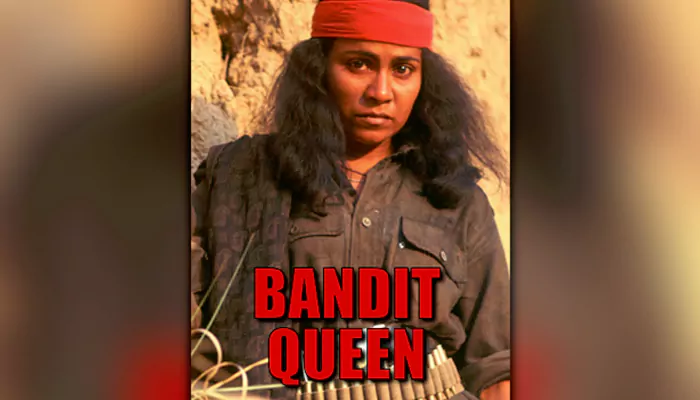
Seema Biswas as Phoolan Devi in Bandit Queen (1994)
Seema Biswas as Phoolan Devi is still lightning in a bottle. The film was censored, banned, invited pickets, and then - after international acclaim - got the National Award for Best Feature in Hindi and global festival nods. Saurabh Shukla, a key collaborator, later called it “a profound learning experience” and admitted that many on the team weren’t quite sure Kapur would pull it off.
The Global Gaze and Perpetual Outsider
Then Hollywood called. With Elizabeth (1998), starring a then-unknown Cate Blanchett, Kapur pivoted again. The scale - period sets, courtly intrigue, English accents repurposed for Indian storytelling - was enormous, yet the lens remained intimate, lingering on Blanchett’s uncertainty, her growing steel.
Cate Blanchett as the titular character in Shekhar Kapur’s Elizabeth
(@artidiariy/Instagram)
BAFTA, Oscar nominations, a Golden Globe nod - Kapur, the so-called Bollywood misfit, turned out to be a master in any language.
He’s directed less than his peers (fans beg for sequels; producers sometimes grow impatient), but the man consistently bets on what he believes matters. At 80, Kapur reads as a stubborn artist - sometimes lost, always searching, forever unwilling to paint by numbers.