One Country, Hundreds of Tongues: How India Became the World’s Most Linguistically Powerful Nation, Trivia on Mother Tongue Day
- Soham Halder
- 17 hours ago
- 4 minutes read
From Sanskrit to Street Slang: How India Became the World’s Most Linguistically Powerful Nation
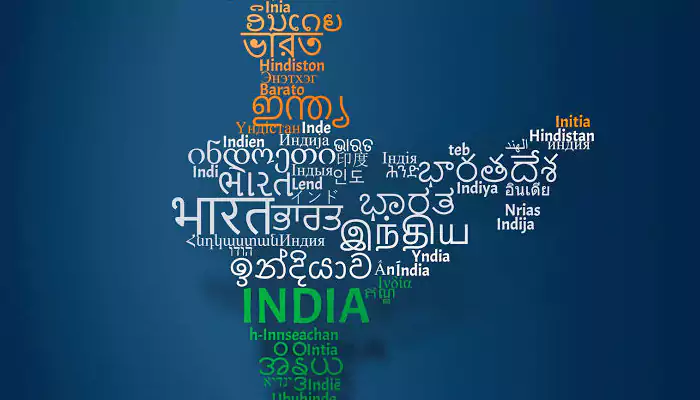
Travel 200 kilometres in India and you may hear a completely new language. Travel another 100, and even the script might change. Yet somehow, the country functions, thrives, debates, sings, negotiates, and celebrates together.
How did one nation become home to hundreds of languages and turn that diversity into power?
Let’s explore.
A Civilization Built on Language
India’s linguistic diversity is not new. It dates back thousands of years. Ancient languages like Sanskrit shaped philosophy, science, literature, and governance. Prakrit and Pali carried teachings across regions. Tamil developed a classical literary tradition that continues to flourish.
Over centuries, migration, trade, invasions, and cultural exchanges layered new languages onto the Indian subcontinent. Persian influenced courtly vocabulary. Arabic shaped coastal trade dialects. Portuguese left words in Konkani and Marathi. English arrived during colonial rule and stayed on as a bridge language.
Instead of replacing older languages, India absorbed and adapted them.
That is the secret: coexistence, not competition.
The Numbers Tell the Story
India officially recognizes 22 scheduled languages under the Constitution. But the real number of spoken languages and dialects crosses hundreds. According to linguistic surveys, India is home to over 19,000 mother tongues reported in various forms.
From Hindi and Bengali to Kannada, Assamese, Manipuri, and Santali, each language carries unique literature, cinema, folklore, and identity.
This isn’t chaos. It’s structured diversity.
Language as Identity
In India, language is more than communication. It is culture.
A Punjabi wedding song, a Malayalam poem, a Marathi powada, or a Bengali Durga Puja chant, each reflects regional pride. People don’t just speak a language; they live it.
Even within one state, dialects change. In Maharashtra alone, you’ll hear variations of Marathi that reflect local history. In the Northeast, tribal languages carry stories passed down orally for generations.
This linguistic richness strengthens local identity while still belonging to a national framework.
The Power of Multilingual Minds
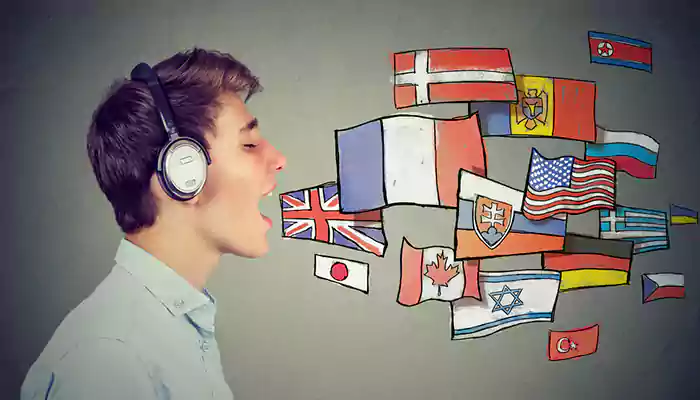
Here’s something fascinating: many Indians grow up bilingual or even trilingual.
A child might speak one language at home, another in school, and use English professionally. This mental flexibility enhances cognitive skills such as problem-solving and adaptability.
In today’s global economy, multilingualism is an advantage. Indian professionals often navigate international markets with ease because switching between languages feels natural.
Call centres, diplomacy, IT services, and global trade all benefit from this built-in linguistic agility.
Bollywood, Media & Pop Culture
India’s entertainment industry reflects its linguistic diversity. Bollywood may dominate Hindi cinema, but regional film industries, Tamil, Telugu, Malayalam, Kannada, Marathi, Bengali produce powerful content watched nationwide.
Subtitles and dubbing have blurred boundaries. Today, a Telugu film can become a national blockbuster, and a Malayalam thriller can trend on streaming platforms across India.
Language is no longer a barrier. It’s a bridge.
Challenges and Resilience
Of course, managing such diversity is not always simple. Language politics have shaped state boundaries and sparked debates.
But India’s constitutional framework respects linguistic identity. States were reorganized largely on linguistic lines after independence, allowing communities to preserve their mother tongues.
Despite occasional friction, the larger story remains one of resilience and accommodation.
India didn’t become linguistically powerful by enforcing uniformity. It did so by allowing plurality.
English: The Connector
While regional languages flourish, English plays a unique role as a neutral link language. It connects states, facilitates higher education, and enables global communication.
This balance of strong regional languages supported by a global connector, gives India a rare dual advantage.
Few nations manage both so effectively.
One Nation, Many Voices
Imagine a country where political debates, poetry, cinema, court rulings, and daily conversations happen in dozens of languages simultaneously, yet still contribute to one national story.
That is India.
In a world where many societies struggle with cultural differences, India demonstrates that diversity can be strength. Linguistic plurality fosters creativity, innovation, and empathy.
When you understand multiple languages, you understand multiple perspectives.
India’s greatest power may not lie only in its economy, population, or technology. It lies in its voices.
Every language spoken here carries centuries of memory. Every dialect preserves identity. Every translation builds connection.
“One country, hundreds of tongues” is not just a statistic.
It is proof that unity does not require sameness.
And in that diversity, India doesn’t just speak, it leads.