Krishna’s Swing vs. Prahlad’s Fire: Why 'Dol' is Spiritually Different from 'Holi’
- Devyani
- 9 hours ago
- 3 minutes read
One is a trial by fire, while the other is a springtime romance on a wooden palanquin. Here is the theological divide between March's two most colorful days.
Walk out onto the streets of South Kolkata or perhaps up north around Dumdum this time of year, and the air already smells faintly of dry air and shifting seasons. Most people treat Dol and Holi as the exact same carnival of synthetic dyes and water balloons. They aren't. Not historically, and definitely not spiritually. It seems we've just aggressively blended them into a singular, pan-Indian block party.
Let’s look at Holi first. The core myth here is deeply visceral. It involves a pyre.
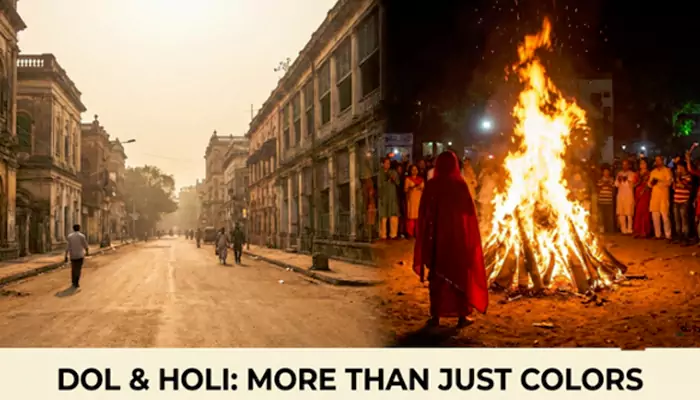
Hiranyakashipu’s sister, Holika, possessed a magical cloak that supposedly made her immune to flames. She tricked her nephew, Prahlad - a devout follower of Vishnu whom the king despised - into sitting on a blazing pyre with her. The narrative twist? The cloak flew off her and wrapped around the boy. She burned; he survived.
Therefore, the night before Holi features Holika Dahan, the lighting of massive community bonfires. It is a loud, aggressive triumph of faith over raw malice. You are quite literally watching evil turn into ash before the actual color-play begins the next morning.
The Wooden Swing
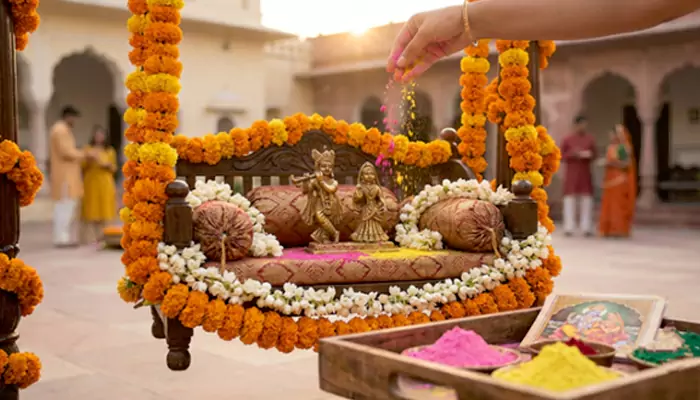
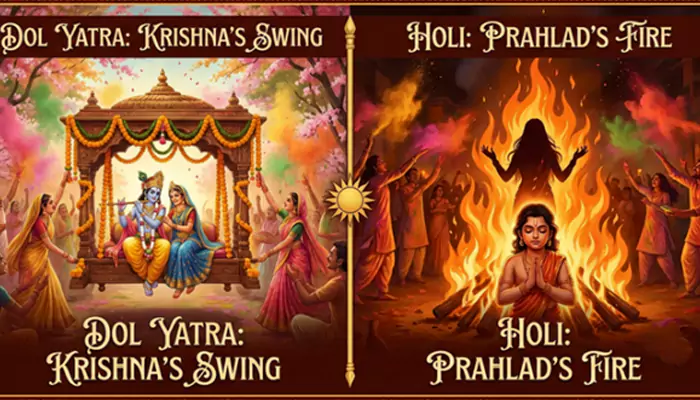
Dol Purnima, on the other hand, shifts the lens entirely. There is no fire here. No demons are being vanquished.
Instead, you get a palanquin (the dola) heavily decorated with fresh flowers. It is fundamentally a celebration of divine romance. Small idols of Krishna and Radha are placed on a swing, and devotees take turns gently pushing it while offering dry, fragrant powder. It is quieter. More poetic, I suppose. The focus isn't on destroying an enemy but on welcoming the spring equinox with a sense of playful, almost musical devotion.
Plus, there is a second, massively important layer to the day. It also marks the birth of Chaitanya Mahaprabhu, the 15th-century mystic who completely revolutionized the Bhakti movement in the eastern regions. For many, the day is as much about his legacy of egalitarian spiritualism as it is about Krishna's springtime antics.
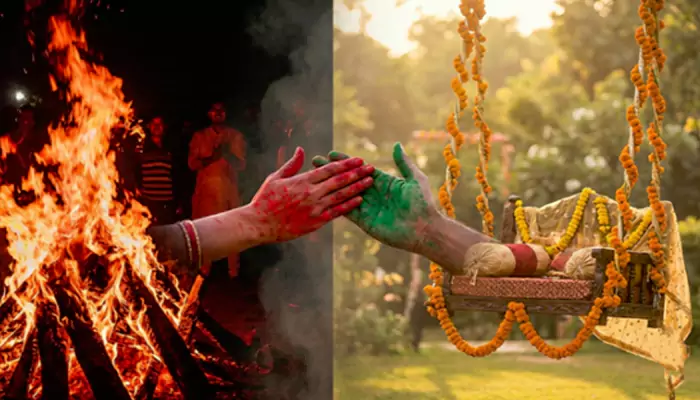
The Philosophical Divide
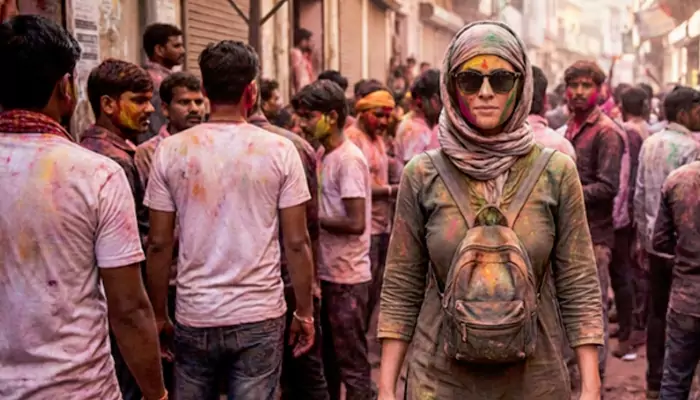
I believe the modern confusion happens simply because both traditions eventually end up with people smearing colored powder on each other's faces. The physical act looks identical in photographs. But the philosophical starting point? They are worlds apart.
One begins with the terrifying, cleansing heat of a bonfire. The other starts with the gentle creak of a wooden swing. Both offer a kind of renewal, but they ask for very different kinds of energy from the people celebrating them.