WHO Pandemic Talks Resume: What Citizens Should Know Before Believing Viral Claims
- Devyani
- 4 months ago
- 3 minutes read
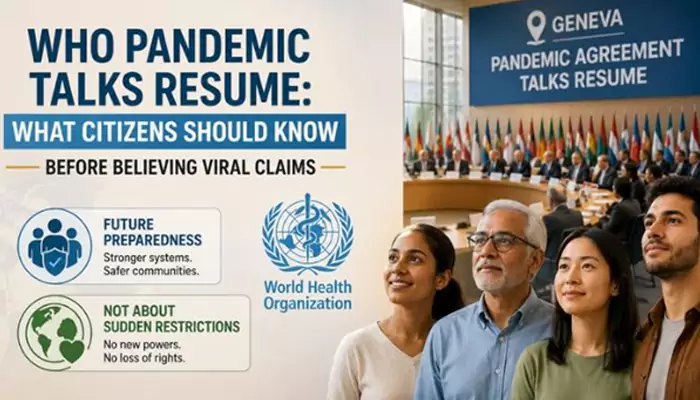
Talks on the WHO Pandemic Agreement are back in Geneva this week, but citizens should know this is about future preparedness, not sudden public restrictions.
Some global health meetings sound boring until a scary WhatsApp forward gives them a villain’s cape. This week’s WHO pandemic talks are one of those.
The resumed sixth meeting of the Intergovernmental Working Group on the WHO Pandemic Agreement is being held in hybrid format in Geneva from April 27 to May 1, 2026. The official schedule lists two long daily sessions, from 09:00–13:00 and 14:00–23:00. So yes, negotiators are putting in proper late-night conference hours.
What Is Actually Being Negotiated?
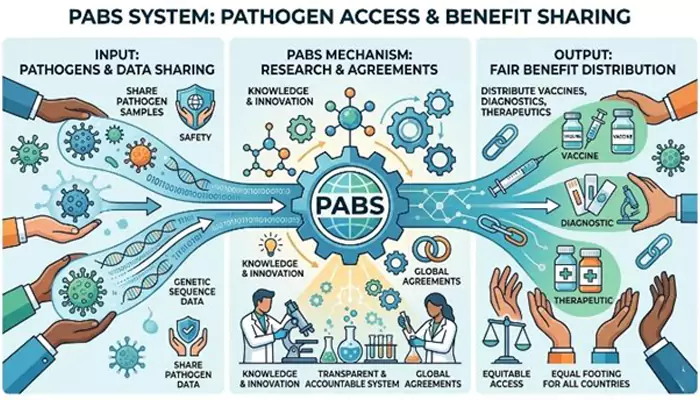
The main subject is not a new lockdown order, travel ban, or vaccine rule for citizens tomorrow morning. The focus is the Pathogen Access and Benefit Sharing system, usually shortened to PABS.
In plain words, PABS is meant to decide how countries share pathogen samples and genetic sequence data during future outbreaks, and how benefits from that sharing, such as vaccines, diagnostics and therapeutics, are distributed more fairly. WHO says the annex is meant to allow safe, transparent and accountable access and benefit-sharing on “equal footing.”
Why These Talks Resumed
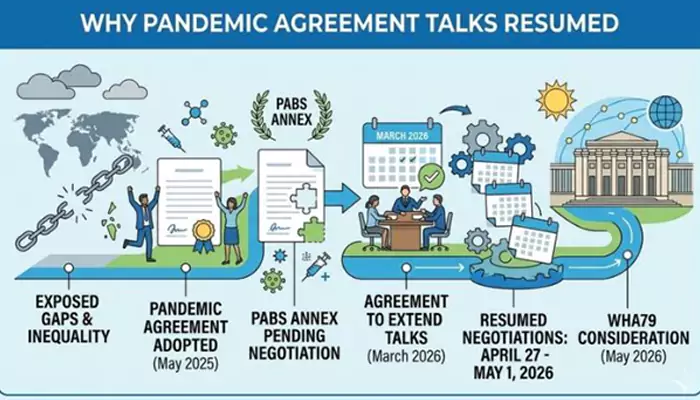
The Pandemic Agreement was adopted by the World Health Assembly in May 2025, after COVID-19 exposed serious gaps in global preparedness and unequal access to health tools. But one key piece, the PABS annex, was left for further negotiation.
Member States agreed in March 2026 to extend talks and continue negotiations from April 27 to May 1, ahead of possible consideration at the Seventy-ninth World Health Assembly in May 2026.
What Citizens Should Not Misread
This is where the rumour factory usually starts grinding.
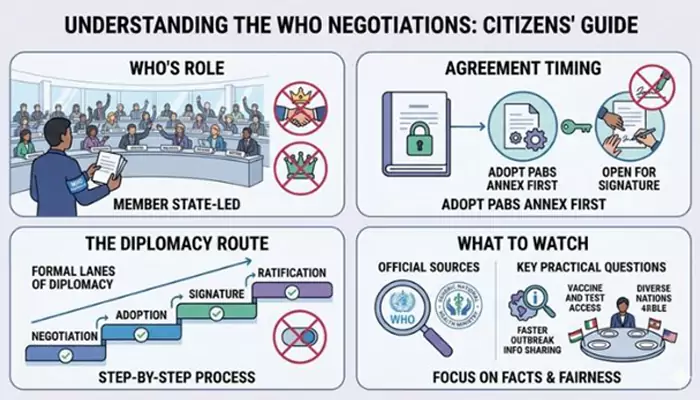
The WHO has clarified that the process is led by Member States. Its Secretariat supports the meetings, but does not decide the content of the agreement. That matters because viral claims often suggest that WHO is directly imposing rules on individual citizens. That is not how this negotiation is described in WHO’s own explainer.
Citizens should also remember that the agreement opens for signature only after the PABS annex is adopted. It still needs country-level steps such as signature and ratification. In other words, this is diplomacy moving through formal lanes, not an instant switch being flipped.
What People Should Watch
Look for official updates from WHO and national health ministries, not clipped posts with dramatic captions. The key questions are practical: how quickly countries share outbreak information, how vaccines and tests are accessed, and whether poorer nations get a fairer seat at the table next time.
The resumed WHO talks are worth following, but not fearing. For citizens, the sensible move is simple: read official updates, ignore panic forwards, and understand that these negotiations concern future pandemic preparedness, not instant daily-life rules.