Here are today’s most important updates from the realm of Science and Space.
Geometric ‘Shiny’ Object Spotted on Mars Leaves Scientists Curious
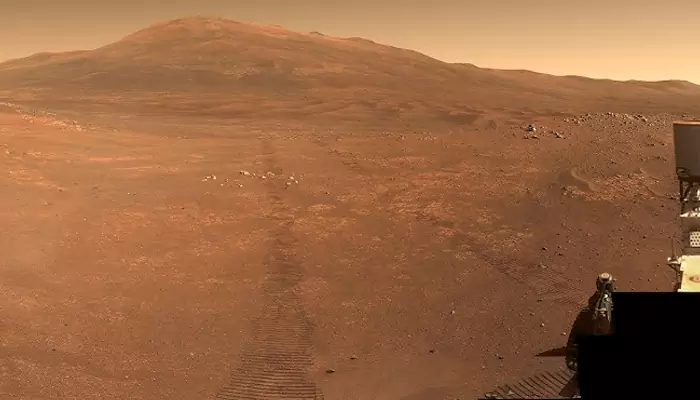
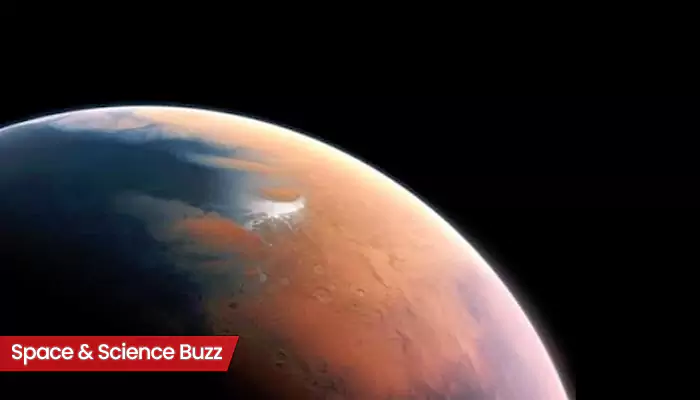
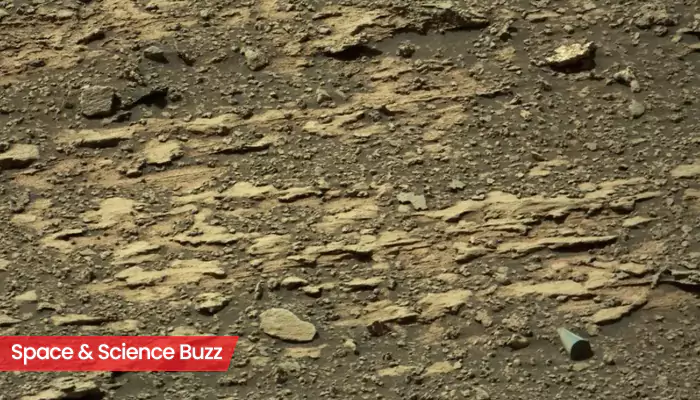
A party hat-shaped object spotted on Mars has sparked fresh debate among scientists, with some suggesting it could hint at something unusual, while others say there may be a far simpler explanation. The cone-like object, about 20 centimetres long with a flat base, was first photographed in 2022 by the Curiosity Rover while exploring Gale Crater on Mars. Interest in the mysterious object resurfaced on March 8 after Avi Loeb highlighted it in a post on Medium. "Should we just assume that the mysterious cylinder is human-made debris and move on or turn back the rover to figure out whether its origin is different?" Loeb asked in the post.
Rare Planet Pairing: Venus Meets Jupiter in Summer Skies

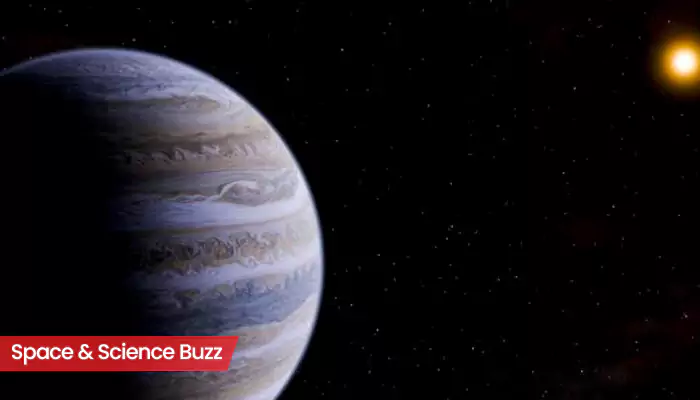
A rare celestial event will give skywatchers an opportunity to see two of the brightest planets appear extremely close to each other in the evening sky. On 9 June 2026, Venus and Jupiter will move so close together that the distance between them will appear similar to the width of a little finger held at arm's length. The event is expected to be clearly visible to the naked eye and can be observed in the weeks leading up to the date, reported BBC. Starting in late March 2026, the distance between Venus and Jupiter will begin to decrease. During this time, Venus will gradually move out of the Sun's glare and become visible in the evening sky.
Astronomers Discover Rare Chemical Mix in Interstellar Comet
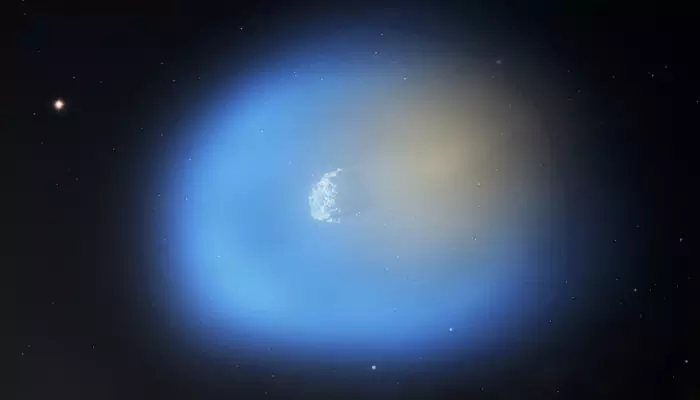
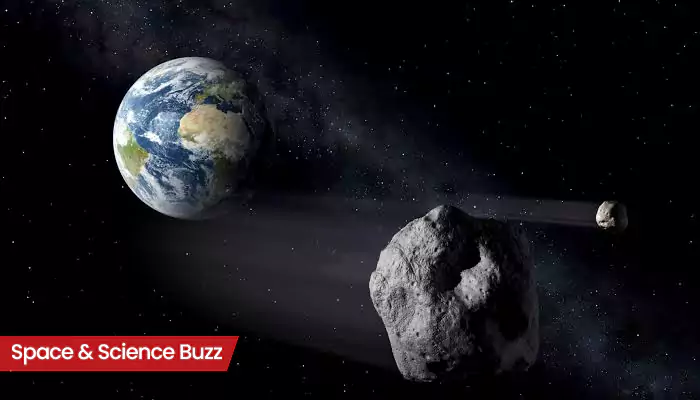
Astronomers have discovered unusually large amounts of methanol in the interstellar comet 3I/ATLAS. The comet contains higher levels of this simple alcohol than almost all known comets from our solar system. Scientists say the finding offers a rare look at the chemical conditions in planetary systems beyond our own, reported Newsweek. Researchers used the Atacama Large Millimeter/submillimeter Array (ALMA) to study the comet. This observatory allowed scientists to analyse 3I/ATLAS's chemical composition and understand how planetary systems outside our solar system form and evolve over time. The research team paid particular attention to two molecules commonly found in comets: methanol (CH₃OH) and hydrogen cyanide (HCN). Although both are organic compounds, their concentrations in 3I/ATLAS were significantly different from those found in typical comets in our solar system.
Earth’s Spin Is Slipping, Days May Stretch Slightly Longer

New research has confirmed that human-driven climate change is slowing Earth's rotation at a rate that is unprecedented for at least the past 3.6 million years. According to Phys.org, this phenomenon, often described using the "figure skater effect," occurs as melting polar ice caps and glaciers redistribute water toward the equator. This shift in mass increases the planet's moment of inertia, causing it to spin more slowly. Between 2000 and 2020, Earth's day length increased by 1.33 milliseconds per century due to climate-related mass redistribution.