Birthday Rewind: Urmila x Ram Gopal Varma - The Dark, Edgy Duo That Changed 90s Bollywood
- Devyani
- 6 hours ago
- 4 minutes read
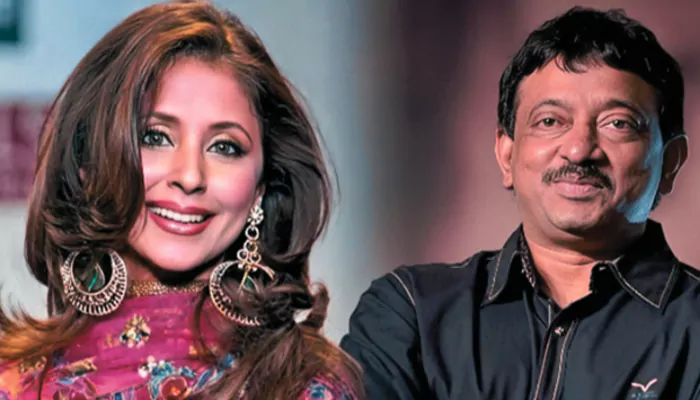
Before "content" was king, this duo was giving us nightmares and daydreams wrapped in one chaotic, stylish package. On her birthday, let's unpack the obsession that redefined cool.
You can’t talk about Urmila Matondkar without talking about Ram Gopal Varma. You just can’t. It’s like trying to discuss thunder without mentioning the lightning that cracked the sky open.
In a decade that was suffocating under the weight of mustard fields and very polite family values (looking at you, Rajshri Productions), the Urmila-RGV collaboration felt like a brick through a stained-glass window. It was jarring. It was rude. And frankly, it was exactly what we needed.
Ram Gopal Verma and Urmila Matondkar
(@yogenshah_s/Instagram)
As Urmila turns a year older this week, I’ve been thinking about why that specific partnership sticks in our collective memory like a catchy song you can’t scrub out. It wasn't just the hits; it was the vibe.
More Than Just a "Makeover"
People love to reduce their collaboration to Rangeela (1995). They talk about the "makeover," the chopped hair, and that oversized shirt in "Tanha Tanha." But to say RGV just "glammed her up" is lazy analysis.
He didn't just change her wardrobe; he changed her wiring.
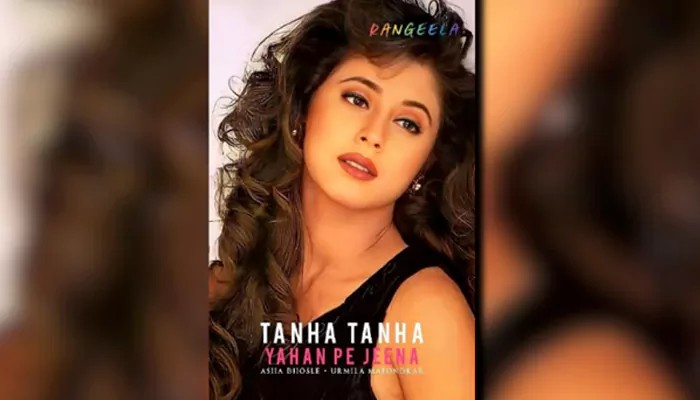
Before RGV, heroines were objects of affection. Under his lens, Urmila became a subject of obsession - but she also had agency. In Rangeela, she wasn't waiting to be saved; she was waiting to be famous. There is a hunger in her eyes in that film that had nothing to do with the hero. RGV saw that hunger. He tapped into a manic energy that other directors were too busy trying to suppress with heavy jewelry and heavy dialogues.
The Descent into Madness
Urmila in Kaun
(@cforsaneema/Instagram)
But the real magic happened when they stopped trying to be "commercial."
Remember Kaun? 1999. A house, a stormy night, and Urmila looking like a nervous wreck. It’s my absolute favorite performance of hers. RGV stripped away the songs, the sets, the backup dancers, and just pointed the camera at her face. And she delivered.
She gave us a character that was twitchy, unreliable, and terrifying. It was a massive gamble. Who pays to see the "Chamma Chamma" girl have a psychological breakdown in real-time? Turns out, we did. They proved that a heroine didn't need to be "likable" to be compelling. She just needed to be interesting.
Remember this song?
(@my.music.forever_/Instagram)
The Grime and the Gloss
Urmila Matondkar and Kamal Haasan in Satya
(@theofficialb4u/Instagram)
What made them such a lethal combo was the contrast. RGV loved the grime of Mumbai - the gangsters, the rain, the claustrophobia of Satya and Bhoot. Urmila brought the gloss, but she wasn't afraid to get dirty.
BTS from Satya
(@asiasocietyic/Instagram)
In Satya (1998), amidst the blood and bullets of the underworld, she was the anchor. She wore simple cotton sarees and played the oblivious, sweet Vidya. It was a masterclass in restraint. It showed that she could hold her own against Manoj Bajpayee’s powerhouse performance without screaming for attention.
A Legacy of Risk
Did they go too far sometimes? Maybe. Daud was a fever dream that I’m still not sure I understand. But that was the point. They took swings.
In an industry that is currently obsessed with safe bets and calculated risks, looking back at the Urmila-RGV era feels like watching a punk rock band crash a wedding. They were loud, they were messy, and they changed the texture of Hindi cinema.
Happy Birthday, Urmila. Thanks for the nightmares in Bhoot and the daydreams in Rangeela.